
Wall-mounted aquariums range far beyond a simple bracket-mounted tank hung on a wall. Once I started researching more ambitious installations — recessed builds, dual-sided dividers, paired symmetrical displays — I realized how much architectural range this style actually offers, well beyond the basic version most people picture first.
These five ideas each take a different approach to the same basic concept, from ambitious structural builds to achievable weekend projects. Each idea includes a detailed image prompt so you can visualize the finished result before starting your own project.
Choosing the Right Wall-Mounted Approach for Your Space
Some ideas on this list, like a fully recessed build or a dual-sided divider, require significant structural planning and often professional installation, while others, like a circular porthole display or a symmetrical twin arrangement, are achievable with standard wall-mounting hardware. Matching the idea's complexity to your own renovation comfort level and budget is worth considering before committing to any single approach.
1. A Fully Recessed Wall Tank
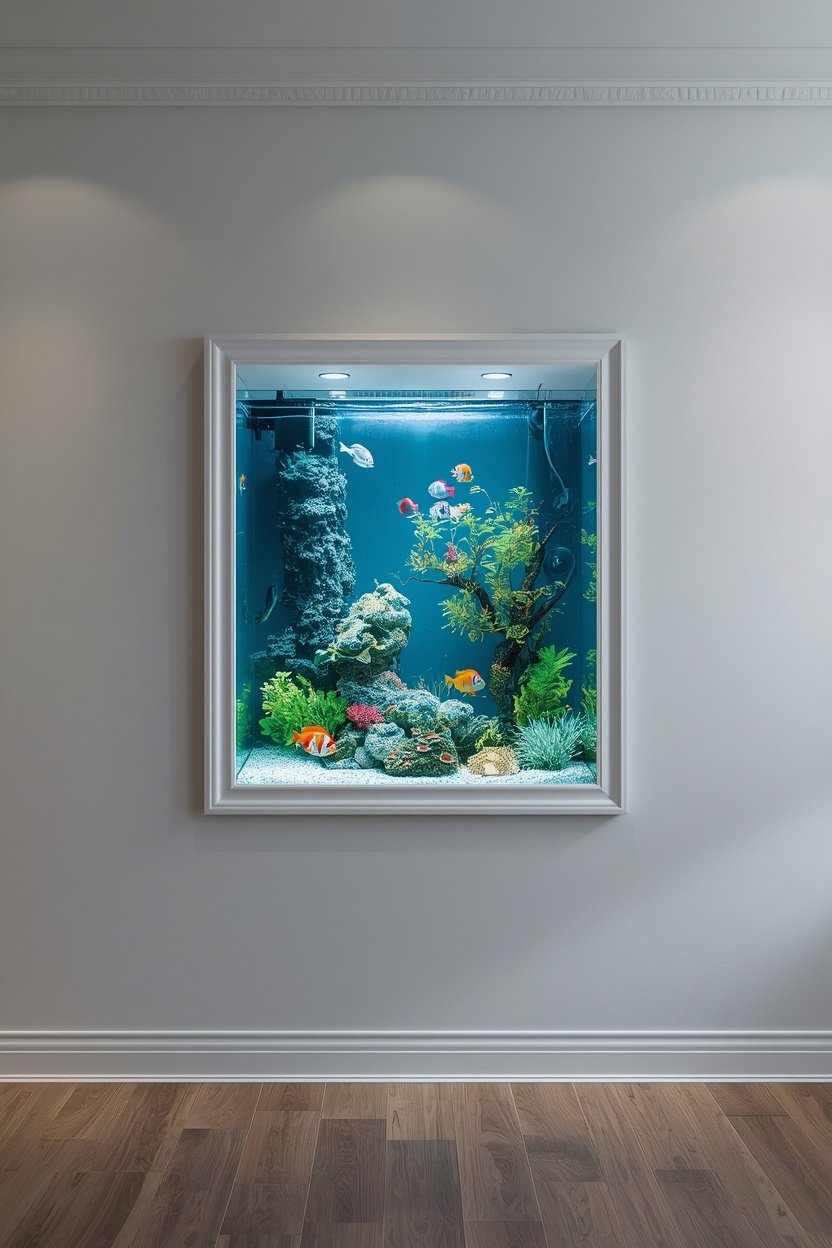
Rather than mounting on top of the wall's surface, a recessed tank sits flush within the wall itself, built into the stud cavity so the glass front aligns almost perfectly with the surrounding drywall. This creates a striking window-like effect, as though a small portal into another world has been cut directly into the room, with none of the visible bracket or stand hardware a surface-mounted tank requires.
This idea takes considerably more planning and often professional installation, since it involves working within the wall's structure rather than simply attaching hardware to its surface. The payoff, though, is a level of seamless integration no other wall-mounted style can match, making the aquarium feel like a permanent architectural feature rather than an added object.
2. A Circular Porthole-Style Display
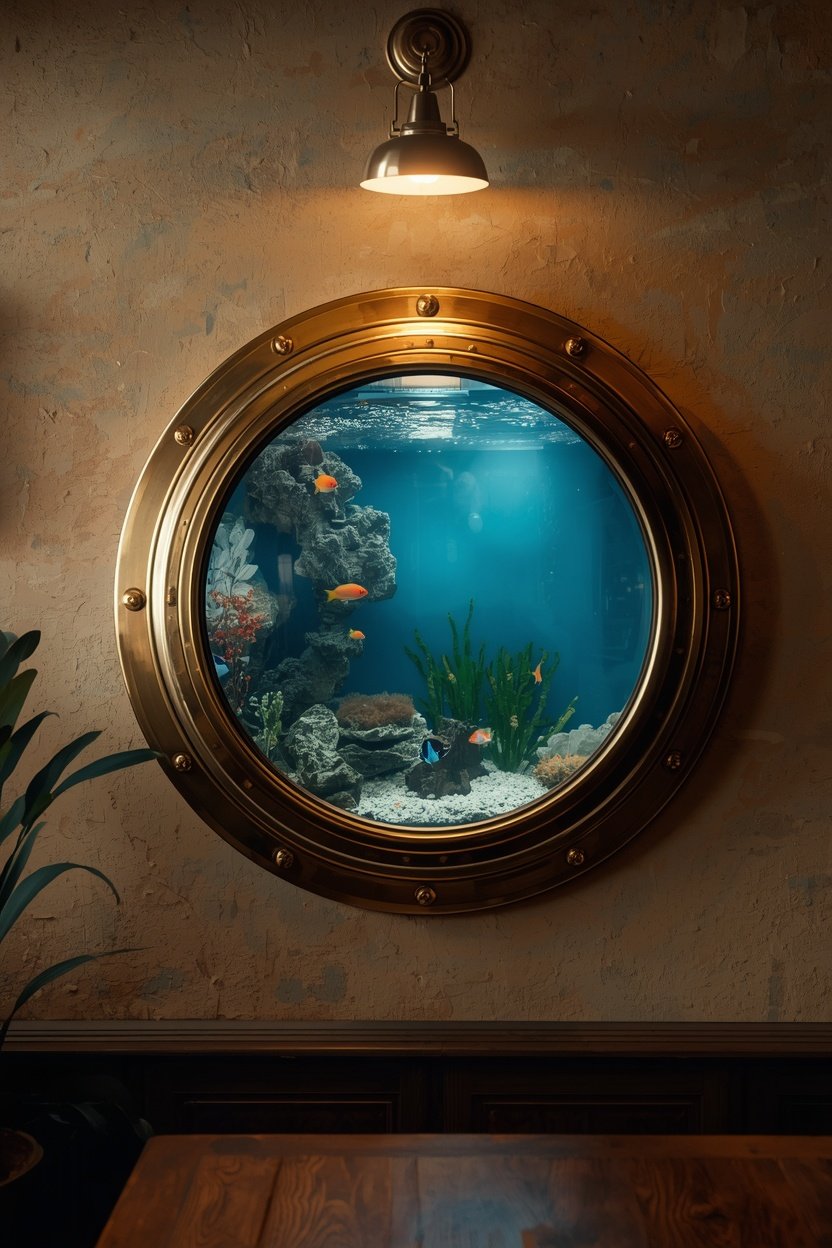
A round, porthole-shaped tank mounted on the wall borrows directly from ship architecture, creating a distinctly nautical, almost vintage feel that a standard rectangular tank can't replicate. The circular shape naturally draws the eye differently than a rectangle, reading as a single, contained focal point rather than a wide display stretching across the wall.
Pair the porthole shape with a metal ring frame in brass or matte black to fully commit to the nautical reference, and keep the internal aquascape simple, since a circular viewing area benefits from a clear, uncluttered scene rather than a busy layout that gets visually cut off by the round frame's edges.
3. A Dual-Sided Pass-Through Room Divider Tank
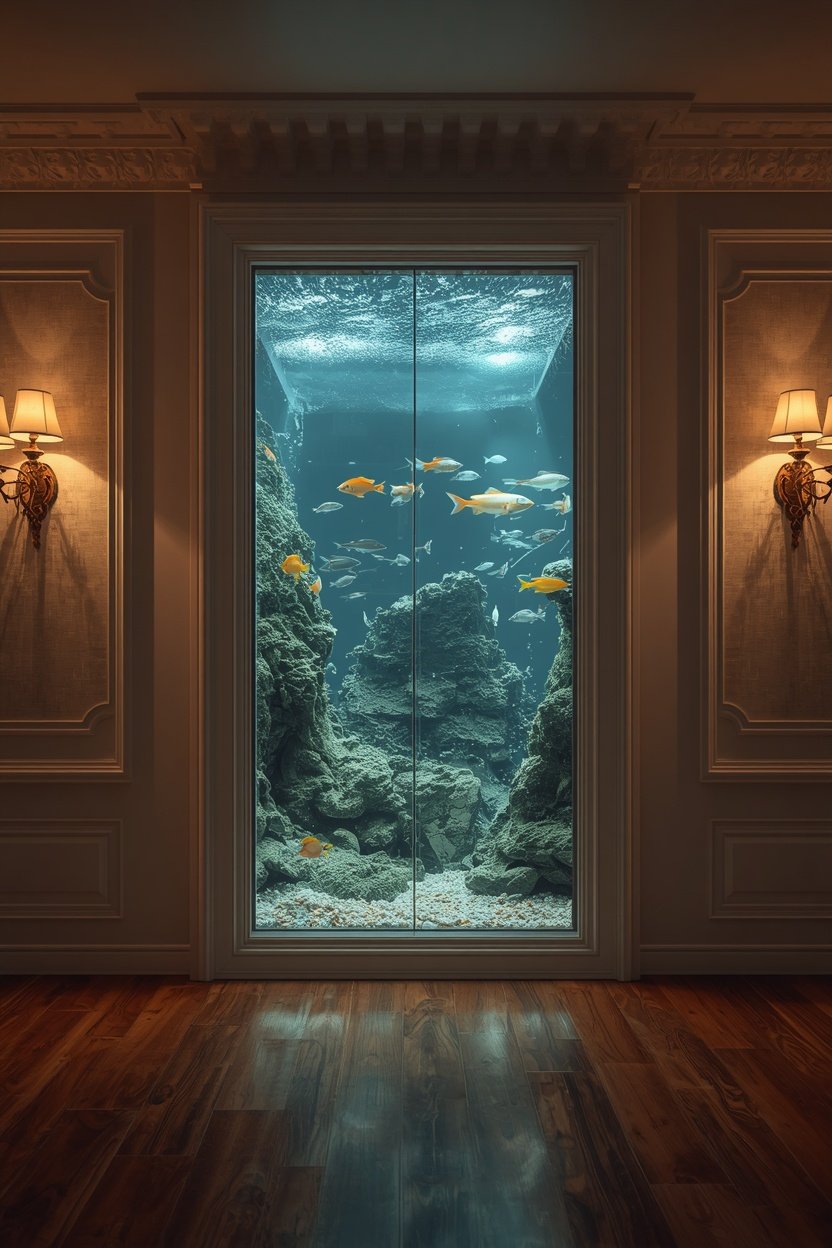
For an open floor plan or a wall separating two connected rooms, a dual-sided aquarium built into an opening in that wall creates a genuinely unique shared feature, visible and enjoyed from both spaces simultaneously. This works particularly well as a divider between a living area and a hallway or study, letting the tank serve as both a room boundary and a connecting visual element.
This idea requires careful planning around framing, plumbing access, and equipment placement, since both sides of the tank need to look intentionally finished rather than having an obviously "back" side. When executed well, though, it's one of the most architecturally impressive wall-mounted ideas on this list, transforming a simple dividing wall into a genuine shared centerpiece.
4. A Symmetrical Twin Tank Display
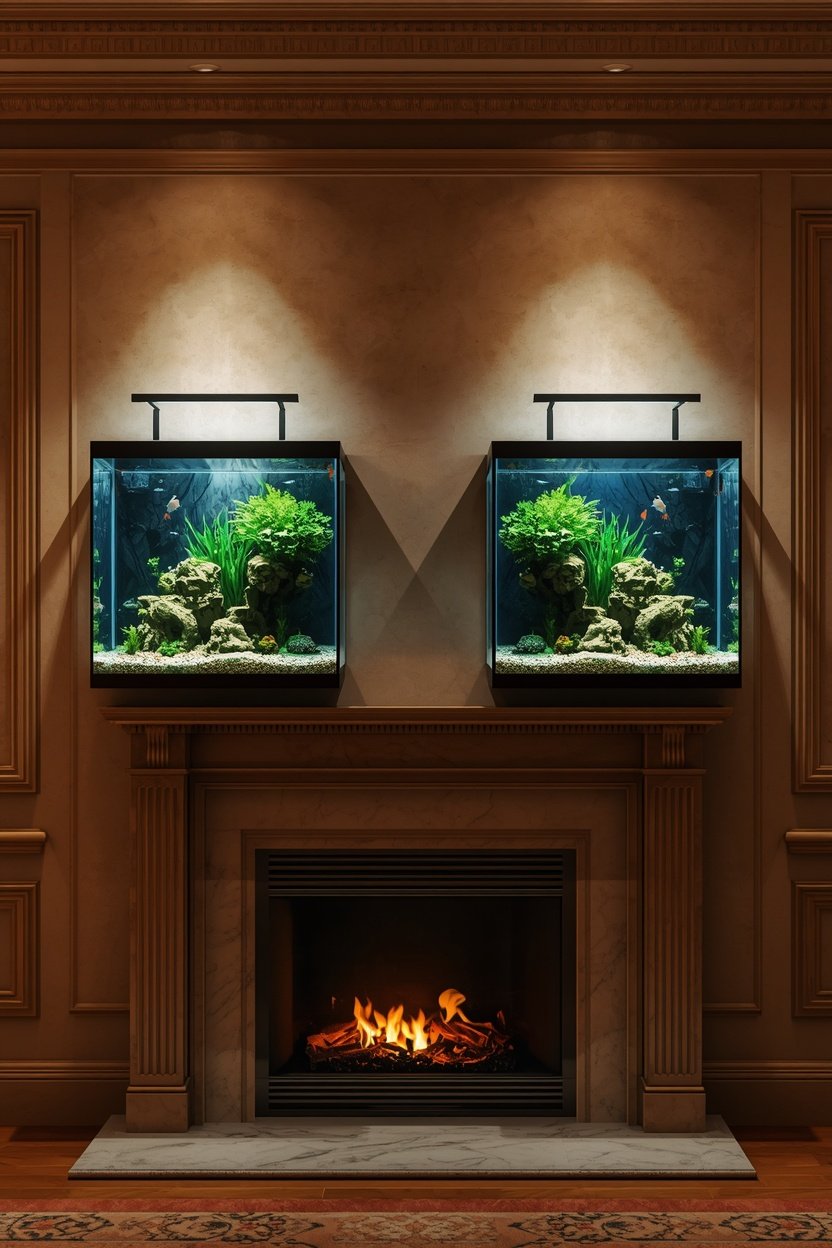
Rather than a single wall tank, this idea uses two identical, smaller tanks mounted symmetrically on either side of a doorway, fireplace, or piece of furniture, creating a balanced, formal visual statement similar to matching wall sconces. Each tank can hold the same fish species and aquascape style for a cohesive, mirrored look, or slightly different content for subtle variation within an overall symmetrical frame.
This idea suits more traditional or formal interior styles particularly well, echoing the classical design principle of paired, balanced elements flanking a central feature. Keep both tanks' mounting height, size, and hardware identical to preserve the symmetry the whole effect depends on.
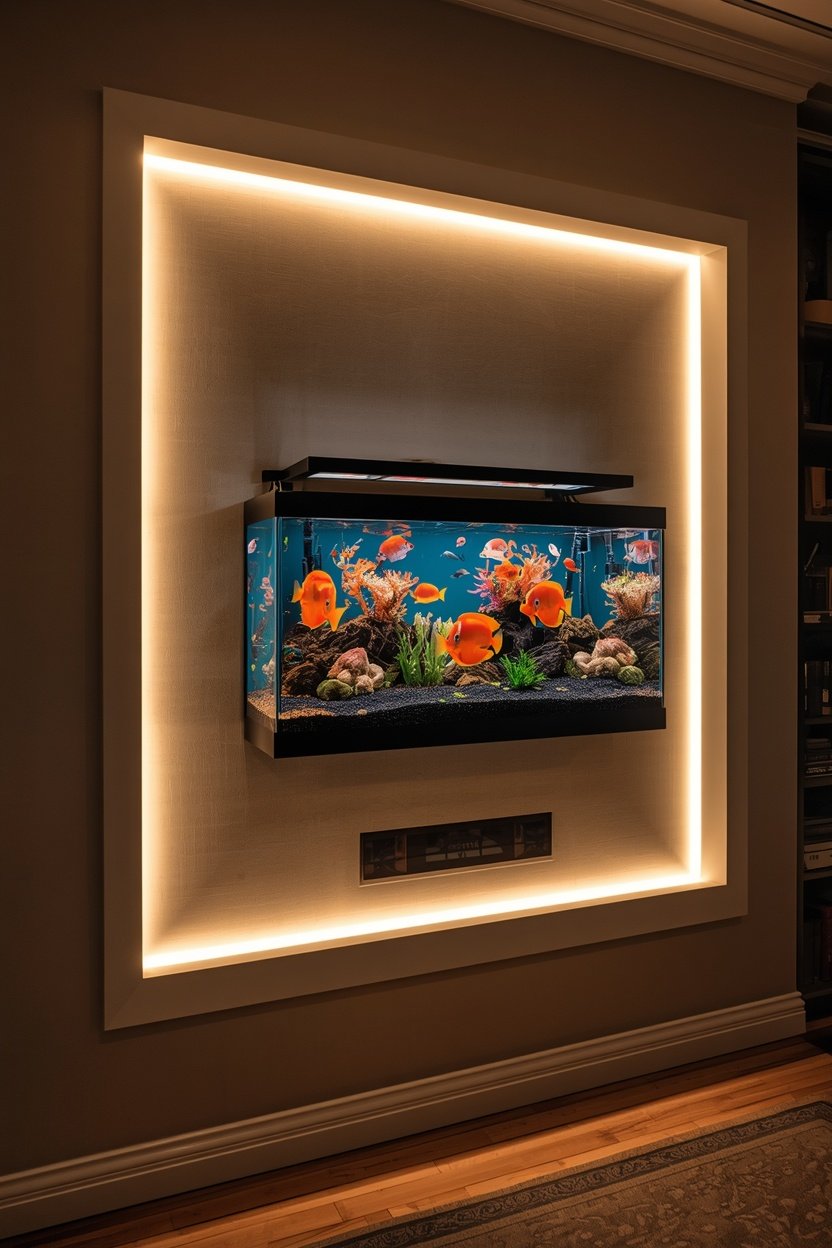
5. An Illuminated Recessed Niche Frame
Building a shallow recessed niche around a wall-mounted tank, lined with integrated LED strip lighting along its inner edges, transforms the aquarium into something resembling a glowing, framed piece of art rather than a standalone object on the wall. The niche's depth creates a natural shadow box effect, while the surrounding LED lighting adds a soft halo of light that makes the whole display glow beyond just the tank's own internal lighting.
This idea works well as a mid-level project for anyone comfortable with basic wall framing and trim work, offering much of the polish of a fully recessed tank without requiring the tank itself to sit flush within the wall's actual structure. The result reads as a genuinely custom, gallery-quality display feature.
Tips for Planning an Ambitious Wall-Mounted Build
- Consult a professional for structural changes. Recessed and dual-sided builds involve wall framing and weight considerations best confirmed by a qualified contractor.
- Plan equipment access before finalizing any built-in design. Filter maintenance and water changes need a realistic access point, even in a seamlessly integrated build.
- Match hardware finishes across symmetrical or paired displays. Consistency in mounting hardware and frame finish is essential for any idea relying on visual balance.
- Test lighting placement before finalizing niche or recessed designs. LED placement within a niche can look different once water and fish are added, so test the effect early.
Final Thoughts
Wall-mounted aquariums offer far more design range than a single bracket-mounted tank suggests, from architecturally ambitious recessed builds to achievable weekend projects like a symmetrical twin display. Whichever idea matches your space, budget, and renovation comfort level, each of these five approaches turns a wall-mounted tank into a genuine design feature rather than simply a space-saving placement choice.
Frequently asked questions
Do recessed wall tanks require professional installation?
In most cases, yes working within a wall's stud cavity involves structural and plumbing considerations that generally call for a qualified contractor rather than a straightforward DIY project.
Are circular tanks harder to maintain than rectangular ones?
Circular tanks can be slightly more challenging to clean in the corners of the curve, though routine maintenance is otherwise comparable to a standard rectangular aquarium.
Can a symmetrical twin tank display use different fish in each tank?
Yes, though matching or closely coordinated fish and aquascape styling between the two tanks generally produces a more cohesive, intentional symmetrical effect than significantly different content in each.
