
When I got my first small colony of cherry shrimp, I assumed I'd need to feed them constantly, the way I fed my fish every day without fail. It took a little research — and a few too-generous feedings that clouded my water — to understand that shrimp actually get most of their daily nutrition from something already living in the tank, not from what I was adding to it. Once I understood that, feeding my shrimp colony became one of the easiest parts of the whole hobby.
This guide breaks down exactly what shrimp eat, from their natural everyday food source to the supplements worth adding a few times a week. Each section includes a detailed image prompt so you can visualize what healthy shrimp feeding actually looks like in a real tank.
Understanding a Shrimp's Natural Diet
Shrimp are opportunistic omnivores and natural scavengers, meaning in the wild they eat whatever biofilm, algae, and organic debris they encounter while foraging across submerged surfaces. This grazing-based diet is the foundation everything else in this guide builds on — supplemental foods exist to round out their nutrition, not to replace the natural grazing behavior that should make up the bulk of their daily feeding in a healthy tank.
1. Algae and Biofilm — Their Natural Everyday Food
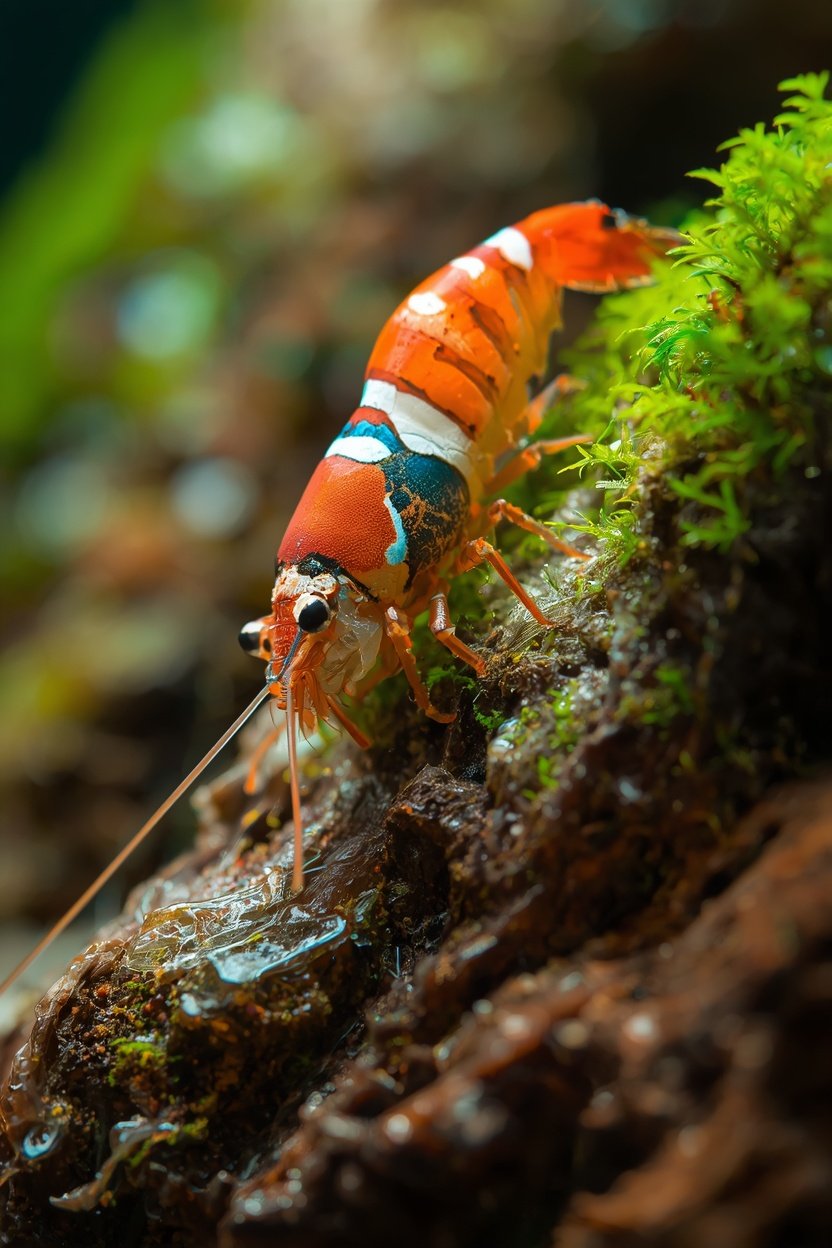
In the wild and in a well-established aquarium, shrimp spend most of their day grazing on biofilm — the thin layer of algae, bacteria, and microorganisms that naturally coats rocks, driftwood, plant leaves, and even the glass itself. This is genuinely their primary food source, not just an occasional snack, which is why shrimp tend to do best in a mature tank that's had time to develop this natural grazing layer rather than a freshly set-up one.
Because biofilm regenerates continuously, shrimp in a healthy tank are almost always seen picking at surfaces throughout the day, using their small front claws to scrape food into their mouths. This constant grazing behavior is also one of the reasons shrimp are so popular in planted tanks, since they help keep algae growth naturally in check without needing much direct intervention.
A tank with plenty of surface area driftwood, rocks, and dense plants or moss — supports more biofilm growth than a sparse, bare-bottomed setup, meaning decor choices genuinely double as feeding infrastructure for a thriving shrimp colony.
2. Blanched Vegetables for Regular Supplementation
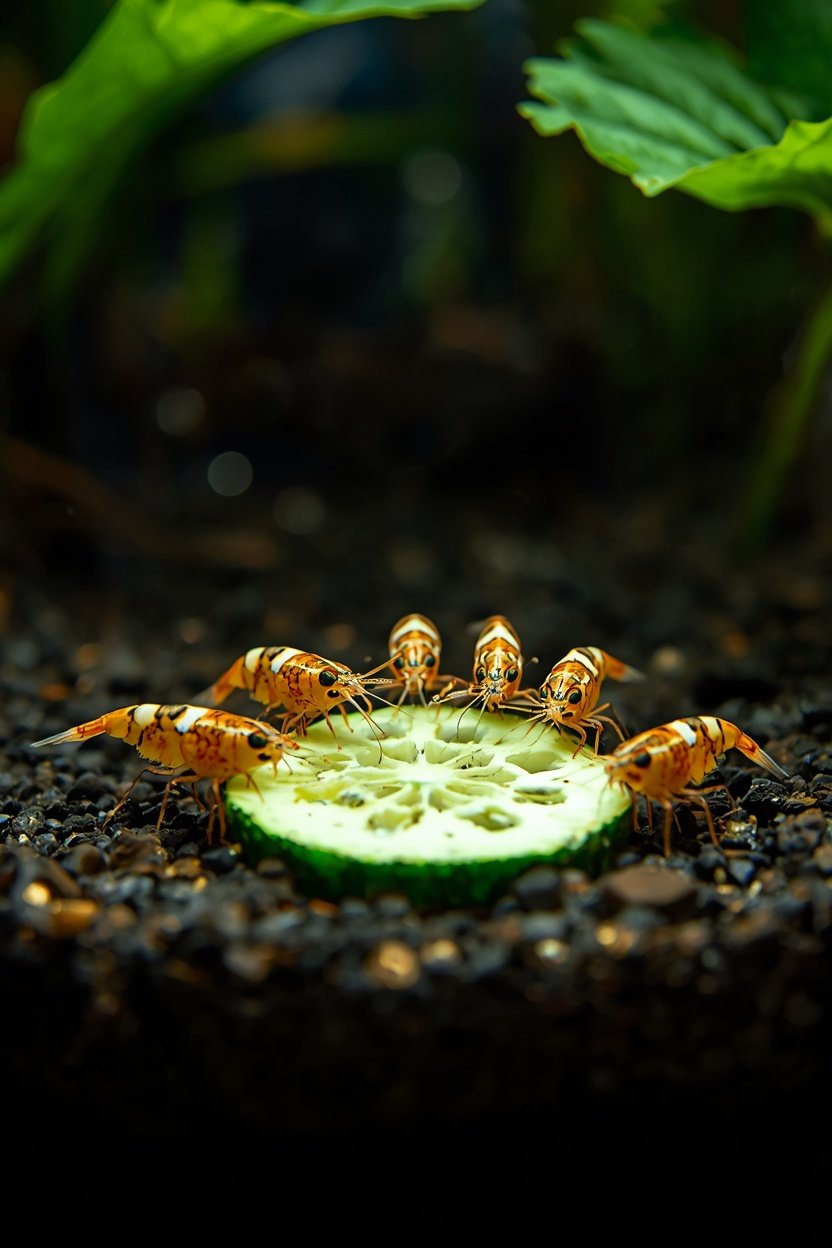
Beyond natural grazing, most shrimp keepers supplement their colony's diet with blanched vegetables a few times a week, giving shrimp a reliable, nutrient-rich food source beyond whatever biofilm happens to be available. Zucchini, spinach, kale, and cucumber are all popular choices, briefly softened in boiling water for a minute or two before being weighted down and placed in the tank.
Blanching softens the vegetable's texture just enough for shrimp to easily pick it apart with their small claws, without cooking it so much that it breaks down and clouds the water. A small slice, roughly the size of a coin, is usually plenty for a modest colony, and any uneaten portion should be removed within 12 to 24 hours to prevent it from fouling the water.
Rotating between two or three different vegetable types over time provides a broader range of nutrients than relying on a single vegetable exclusively, and most shrimp keepers find their colony develops mild preferences worth noting for future feedings.
3. Commercial Shrimp Food and Sinking Pellets
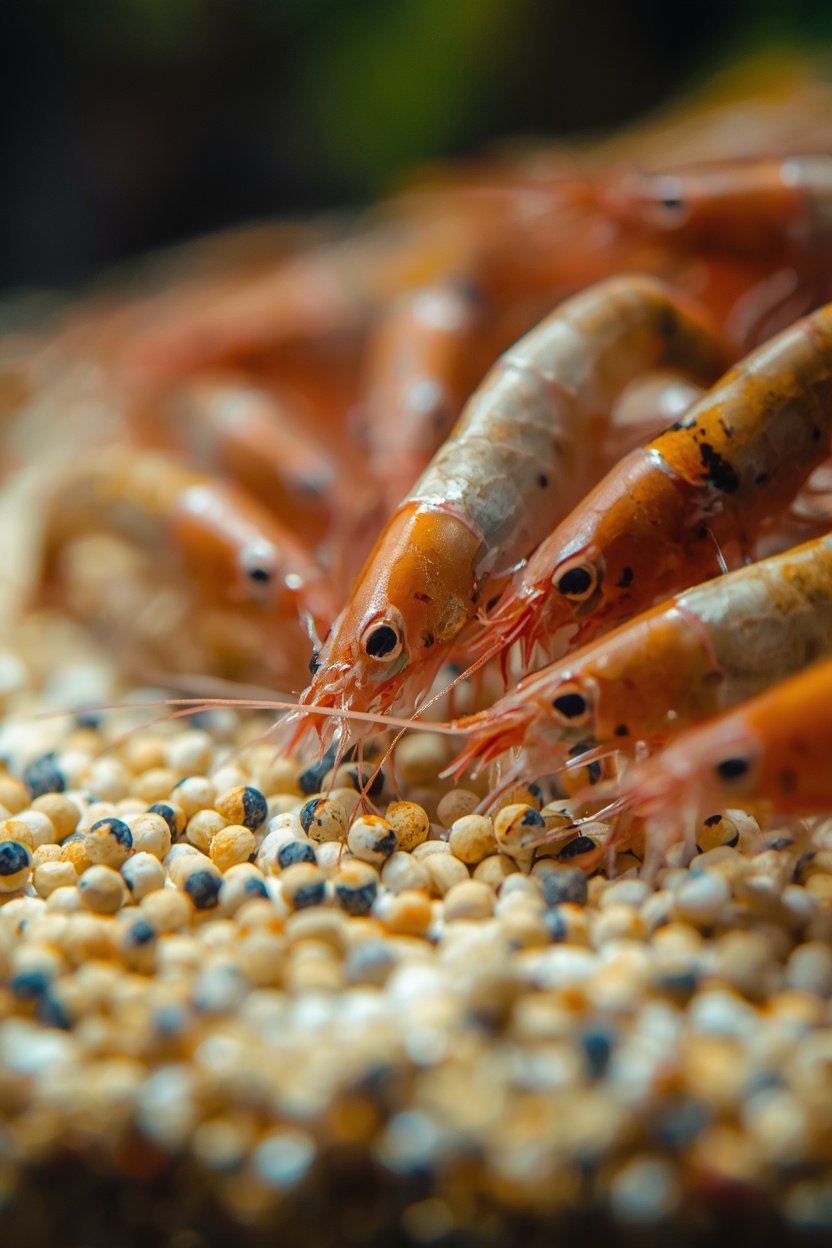
Purpose-made commercial shrimp foods, typically sold as small sinking pellets or wafers, are formulated specifically to meet shrimp's nutritional needs, including calcium and other minerals that support healthy molting. These foods are a convenient, mess-free way to ensure a colony gets balanced nutrition beyond what biofilm and vegetables alone provide, especially in tanks with a larger shrimp population.
Feed commercial shrimp food sparingly — a small pinch every couple of days is typically enough for a modest colony, since overfeeding is one of the most common mistakes shrimp keepers make. Excess food that goes uneaten breaks down in the water, potentially harming water quality far more than it benefits a colony that's already getting most of its nutrition from natural grazing.
Look specifically for shrimp-formulated food rather than standard fish food when possible, since fish-focused formulas aren't always balanced for shrimp's specific mineral needs, particularly calcium, which plays a direct role in helping shrimp successfully complete their molting cycle.
4. Occasional Protein and Botanical Treats
While shrimp are largely herbivorous grazers, small amounts of protein — a tiny piece of blanched shrimp, a small portion of freeze-dried bloodworm, or a specialized protein-based treat — can be offered occasionally, particularly to support breeding females or a colony that seems to need an extra nutritional boost. This should remain an occasional treat rather than a regular part of the diet, since too much protein can affect water quality more noticeably than vegetable matter.
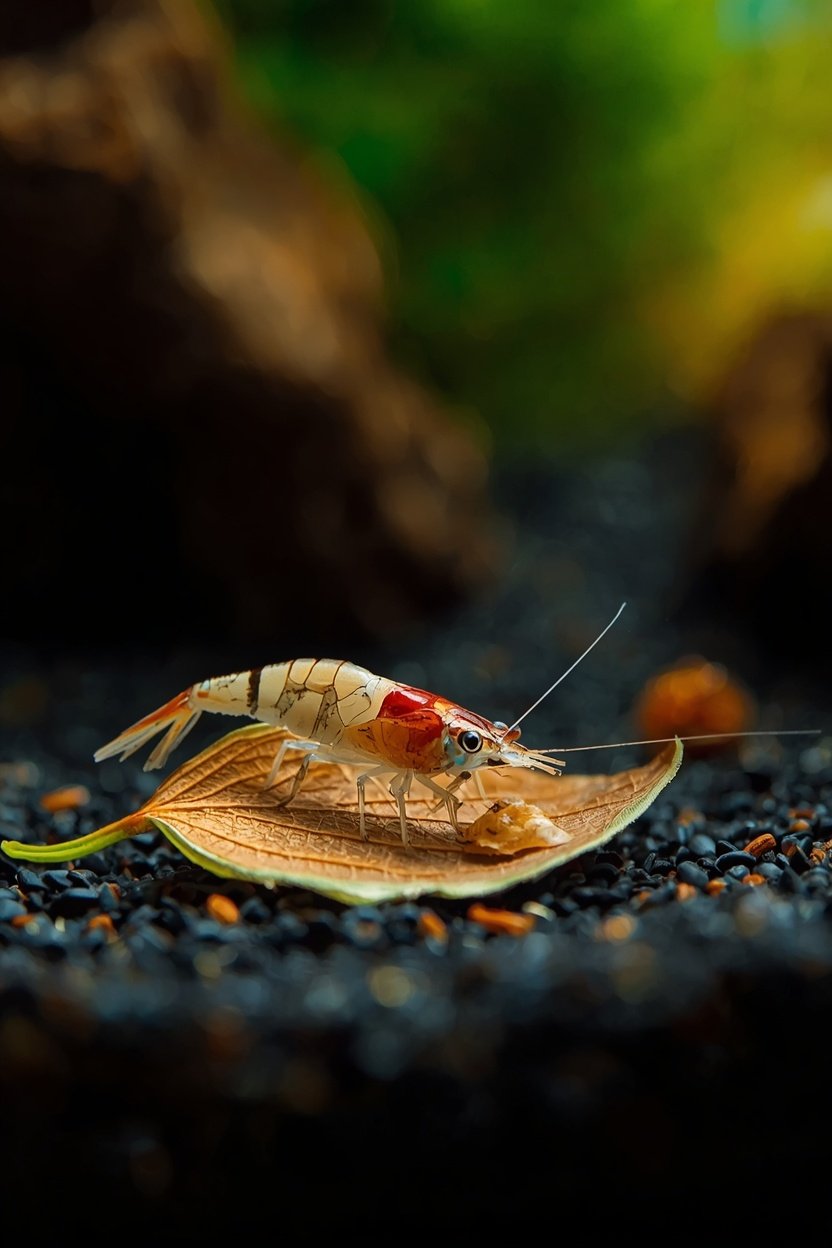
Botanicals like dried catappa leaves and alder cones serve a dual purpose worth mentioning here too: as they slowly decompose, they become another grazing surface rich in biofilm, giving shrimp an additional natural food source that also happens to support water chemistry many shrimp species prefer.
Balancing these occasional additions against the steady foundation of biofilm grazing, regular vegetables, and modest commercial food keeps a shrimp colony's diet varied without tipping into overfeeding, which remains the single most common dietary mistake in shrimp keeping.
Feeding Tips Every Shrimp Keeper Should Know
- When in doubt, feed less. A healthy, well-established tank provides more natural food than beginners often expect, so err on the side of underfeeding rather than over.
- Remove uneaten food promptly. Anything left uneaten after 12 to 24 hours should be removed to protect water quality, regardless of what type of food it is.
- Watch your colony's body condition. Visibly thin or pale shrimp can signal a need for more frequent or varied feeding, while a thriving, active colony rarely needs adjustment.
- Let a new tank mature before relying on biofilm. A freshly set-up tank hasn't yet developed much natural grazing surface, so slightly more supplemental feeding may be needed in the first several weeks.
Final Thoughts
Feeding shrimp well comes down to understanding that most of their daily diet is already happening quietly in the background, through natural grazing on biofilm and algae, rather than through anything you actively add to the tank. Blanched vegetables, commercial shrimp food, and the occasional protein or botanical treat round out that foundation without overwhelming it. Keep portions modest, remove leftovers promptly, and trust that a healthy, established tank is doing more of the feeding work than it might first appear.
Frequently asked questions
How often should I feed my shrimp?
Most shrimp keepers supplement feeding two to three times a week beyond natural grazing, adjusting slightly based on colony size and how quickly food is being consumed.
Can shrimp survive on biofilm alone?
In a well-established, densely planted tank, shrimp can survive largely on biofilm and natural grazing, though most keepers still supplement periodically to ensure balanced long-term nutrition, especially for breeding colonies.
What foods should I avoid feeding shrimp?
Avoid seasoned or oily human foods, copper-containing products, and excessive protein, all of which can harm shrimp directly or degrade water quality more quickly than typical shrimp-safe foods.
