
When I got my first small colony of cherry shrimp, I assumed feeding them would work just like feeding my fish — drop in some flakes, done. It didn't take long to realize shrimp eat almost nothing like typical community fish, spending most of their time grazing continuously on surfaces rather than waiting for scheduled meals, which completely changed how I thought about feeding them well.
This guide breaks down exactly what shrimp eat in a home aquarium, from the natural grazing that makes up most of their diet to the supplemental foods worth adding a few times a week. Each section includes a detailed image prompt so you can visualize what healthy shrimp feeding actually looks like.
Understanding How Shrimp Actually Eat
Unlike most aquarium fish, which eat a distinct meal a few times a day, shrimp are near-constant grazers, picking at surfaces throughout their entire waking period rather than consuming a single defined feeding. This behavior shapes everything about how to feed them well: the goal isn't replicating a fish's feeding schedule, but supporting an environment where near-continuous grazing is genuinely possible.
1. Algae and Biofilm — Their Natural, Everyday Food
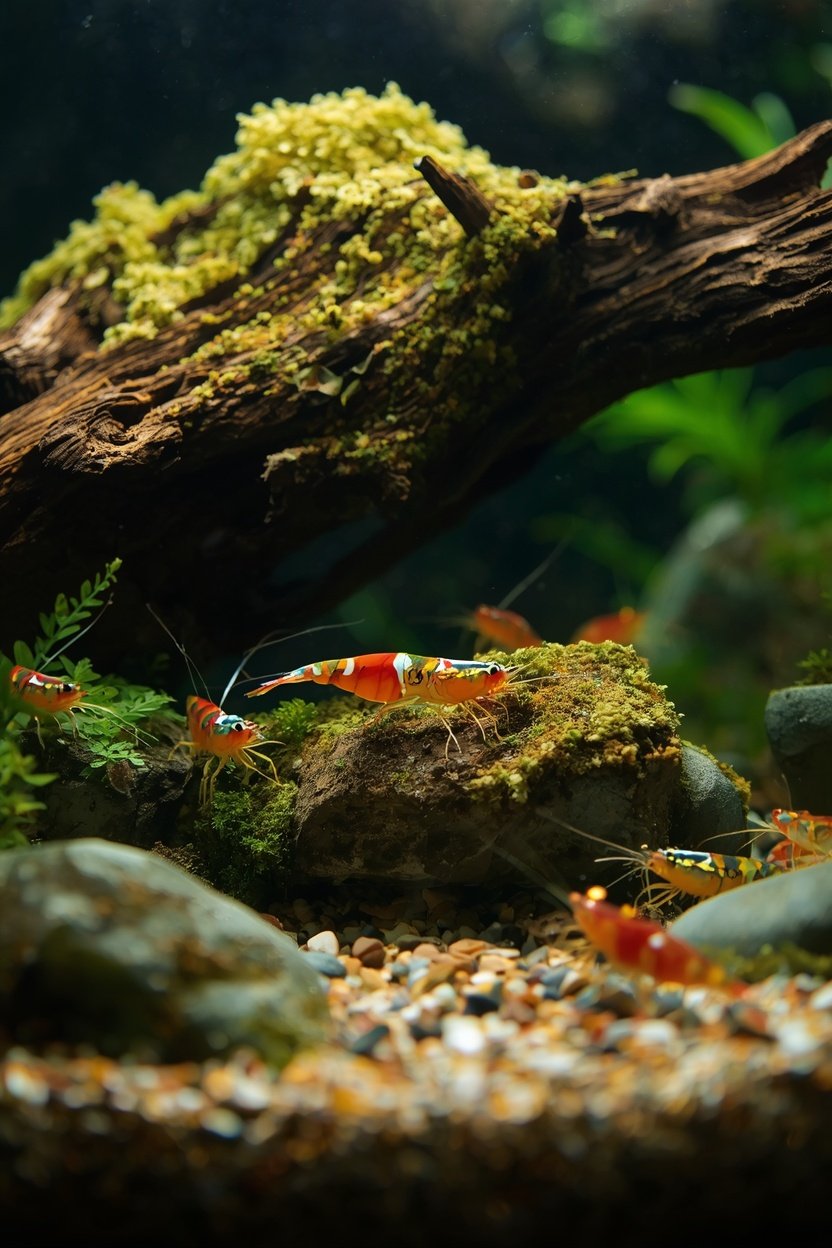
In the wild, shrimp spend most of their waking hours doing exactly what you'll see them doing in a home aquarium: picking constantly at surfaces covered in algae and biofilm, a thin living layer of bacteria, fungi, and microorganisms that naturally forms on rocks, driftwood, glass, and plant leaves. This isn't a fallback food source — it's genuinely their primary, preferred diet, and a well-established tank with visible algae growth is doing much of the feeding work automatically.
This is why experienced shrimp keepers often avoid overly aggressive tank cleaning, since scrubbing every surface spotless removes the very food layer shrimp rely on most. A tank that looks slightly "dirty" by typical aquarium standards, with a light dusting of algae on hardscape and glass, is often exactly what a thriving shrimp colony wants to see.
Encouraging natural algae and biofilm growth is as simple as allowing a tank to mature without excessive scrubbing, keeping a moderate light schedule, and providing plenty of surface area — driftwood, rocks, and moss especially — for this natural food layer to establish across.
2. Blanched Vegetables — A Simple, Nutritious Supplement
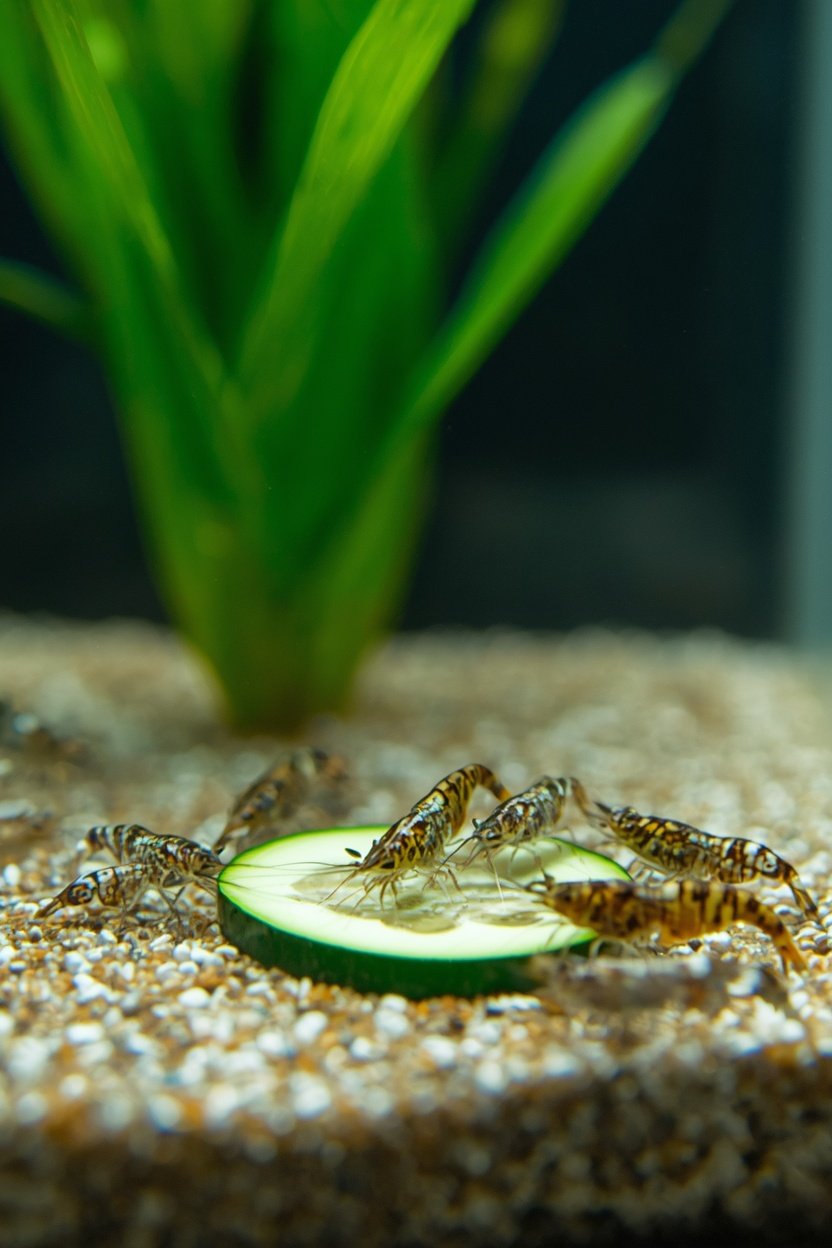
Beyond what they graze naturally, shrimp benefit significantly from blanched vegetables offered a few times a week, giving them a reliable source of additional nutrition beyond whatever biofilm happens to be available at any given moment. Zucchini, spinach, cucumber, and carrot are all popular, easy options — briefly boiled or steamed just until slightly soft, then cooled completely before going into the tank.
Blanching softens the vegetable enough for shrimp's small mouthparts to process it effectively, since raw vegetables are often too firm for them to make meaningful progress on. A thin slice, weighted down with a small fork or vegetable clip so it sinks and stays in place, gives an entire colony something to graze on together for several hours.
Remove any uneaten portion within 12 to 24 hours to prevent it from fouling the water, and rotate between a few different vegetable types over time rather than offering the same one repeatedly, giving your shrimp a slightly varied nutritional profile across the week.
3. Commercial Shrimp Pellets and Sinking Foods
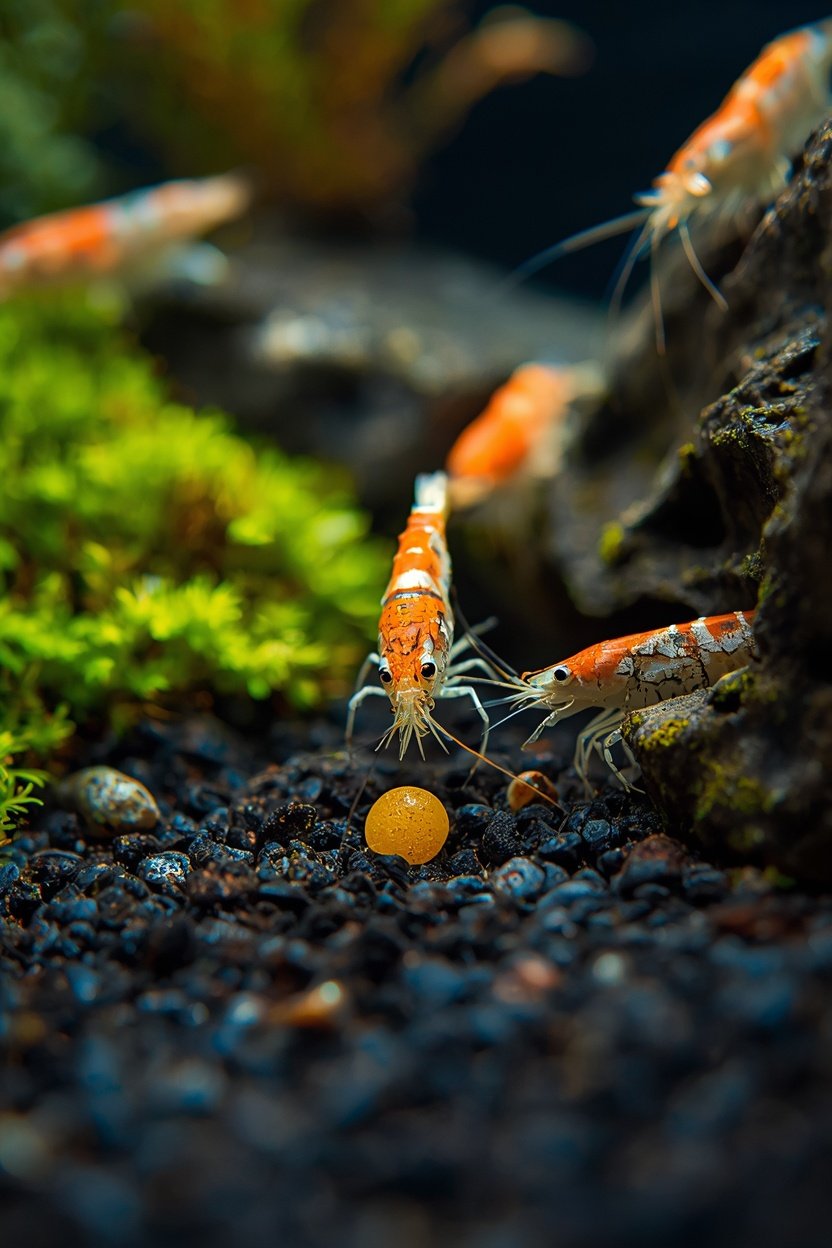
Purpose-made shrimp pellets and sinking wafers, sold specifically for ornamental shrimp, offer a convenient, nutritionally balanced option designed around what shrimp actually need — typically a mix of plant matter, minerals, and a modest amount of protein. These commercial foods are especially useful for ensuring consistent nutrition without needing to prepare fresh vegetables every single feeding.
Because shrimp are small and slow eaters compared to most fish, offering only a very small amount at each feeding matters enormously here — a single small pellet can often feed an entire small colony for a full session, and overfeeding is one of the most common mistakes new shrimp keepers make. Watch how quickly food disappears over the first few feedings to calibrate the right portion size for your specific colony size.
Look specifically for shrimp-formulated foods rather than generic fish food when possible, since some standard fish foods include copper or other additives that can be harmful to shrimp in concentrations perfectly safe for fish.
4. Botanicals and Leaf Litter — A Natural Grazing Surface
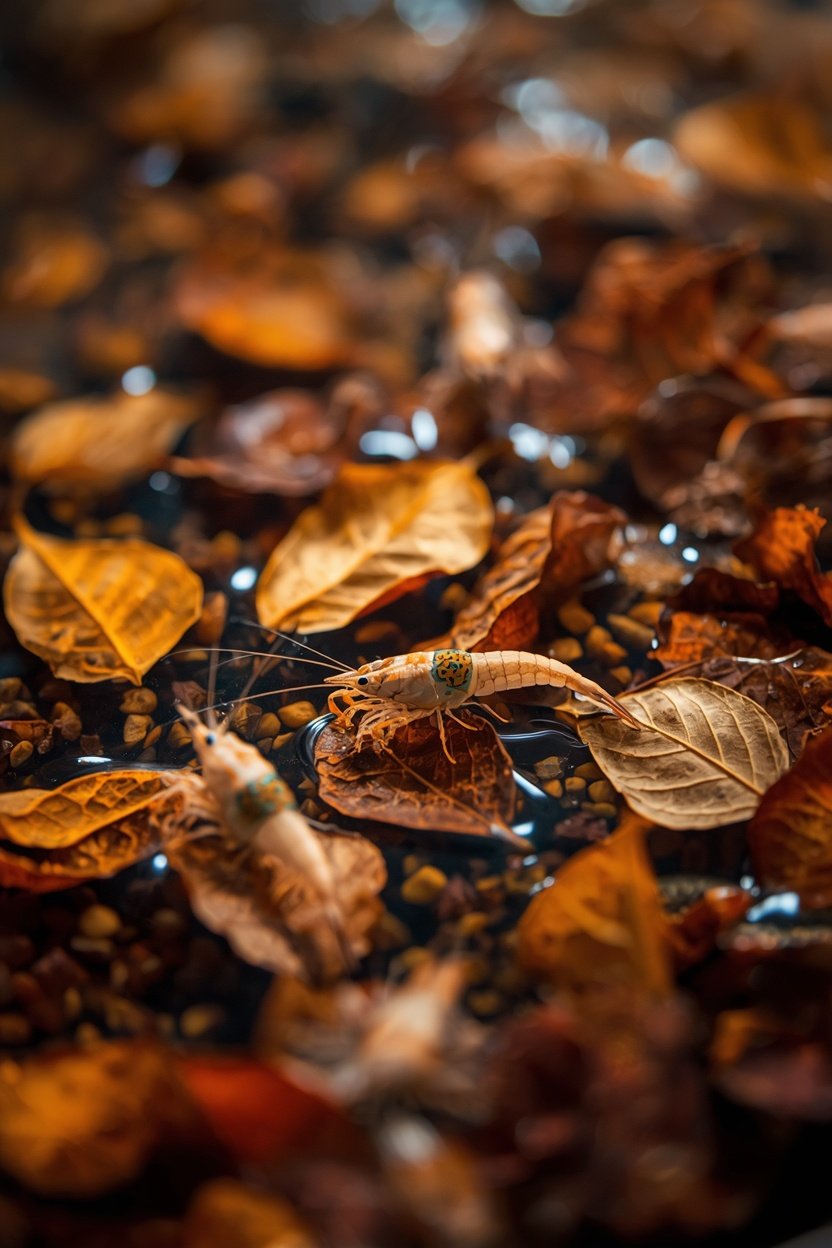
Dried leaves like Indian almond (catappa) leaves and alder cones aren't just decorative additions to a shrimp tank — as they slowly break down in the water, they develop their own biofilm coating and become an ongoing grazing surface shrimp will pick at for days or weeks at a time. Some shrimp keepers consider a steady supply of decomposing leaf litter nearly as important as any other food source on this list.
These botanicals also release mild tannins into the water as they break down, which many keepers believe offer some antibacterial benefit and contribute to the softer, slightly acidic water conditions many shrimp species naturally prefer. Replace leaves gradually as they fully decompose rather than removing the entire supply at once, keeping a steady rotation available at all times.
This combination of function and low-effort maintenance makes leaf litter one of the more efficient additions to any shrimp feeding routine, providing sustained grazing value long after a piece of blanched vegetable would have already been removed.
Feeding Tips Every Beginner Should Know
- Feed less than you think you need. Overfeeding is the most common shrimp-keeping mistake, and excess food fouls water quickly in a small tank.
- Remove uneaten food promptly. Anything not consumed within 12 to 24 hours should be removed to protect water quality.
- Vary the diet across the week. Rotating between algae grazing, vegetables, commercial pellets, and botanicals supports more complete nutrition than any single food alone.
- Avoid copper-containing foods and medications. Shrimp are highly sensitive to copper, so always confirm any product is specifically labeled shrimp-safe.
Final Thoughts
A healthy shrimp diet is really about supporting their natural, near-constant grazing behavior rather than replicating a typical fish feeding schedule. Algae and biofilm do most of the daily work on their own, while blanched vegetables, commercial pellets, and botanicals round out a genuinely balanced diet a few times each week. Get this rhythm right, and you'll likely notice your shrimp staying more active, more colorful, and considerably more likely to breed successfully over time.
