
When I got my first small colony of cherry shrimp, I made the same mistake a lot of beginners make: I fed them like tiny fish, dropping in flake food every day and assuming more food meant happier shrimp. What I didn't realize yet was that shrimp are mostly grazers, spending far more time picking at natural surfaces throughout the day than actually eating anything I dropped in myself, and that overfeeding was actually causing more harm than good.
Understanding what shrimp really eat, and how often, makes a genuine difference in colony health, water quality, and how successfully your shrimp breed and grow over time. This guide breaks their diet down into four practical categories, from the food they're already eating without your help to the occasional supplements that support healthy molting.
Why Shrimp Nutrition Works Differently Than Fish Food
Fish generally eat in short, active bursts at feeding time, while shrimp graze almost continuously throughout the day across every surface in the tank. This fundamental difference in feeding behavior is why a shrimp-specific approach to nutrition — built around constant natural grazing supplemented by occasional targeted feedings — produces healthier results than simply treating shrimp like small fish and feeding on the same schedule.
1. Biofilm — Their Most Important Everyday Food
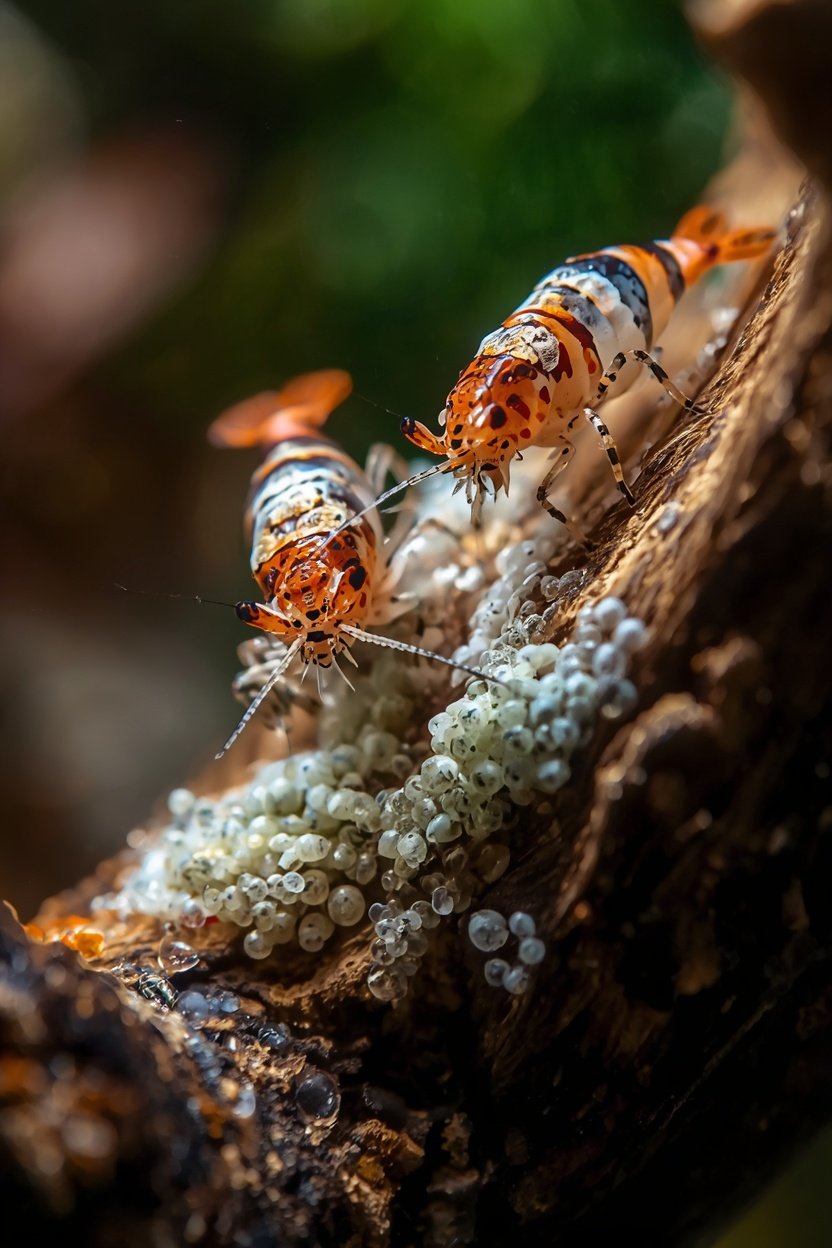
Before looking at anything you might add to the tank yourself, it helps to understand what shrimp actually spend most of their day eating: biofilm. This thin layer of bacteria, algae, and microorganisms coats nearly every surface in a mature aquarium — rocks, driftwood, glass, and plant leaves — and shrimp graze on it almost constantly, picking at surfaces with their small front claws throughout the day.
This is exactly why shrimp tend to do so much better in an established, mature tank than a freshly set-up one. A brand-new aquarium simply hasn't had time to build up this natural food layer, which is part of why experienced keepers recommend letting a tank run and mature for several weeks before adding a shrimp colony.
You don't need to do anything special to "feed" biofilm — it develops naturally once your tank is cycled and stable. What you can do is give it more surface area to grow on, which is really the underlying reason moss, driftwood, and leaf litter are such popular additions to a shrimp tank: they aren't just decoration, they're feeding stations.
2. Blanched Vegetables for Regular Variety
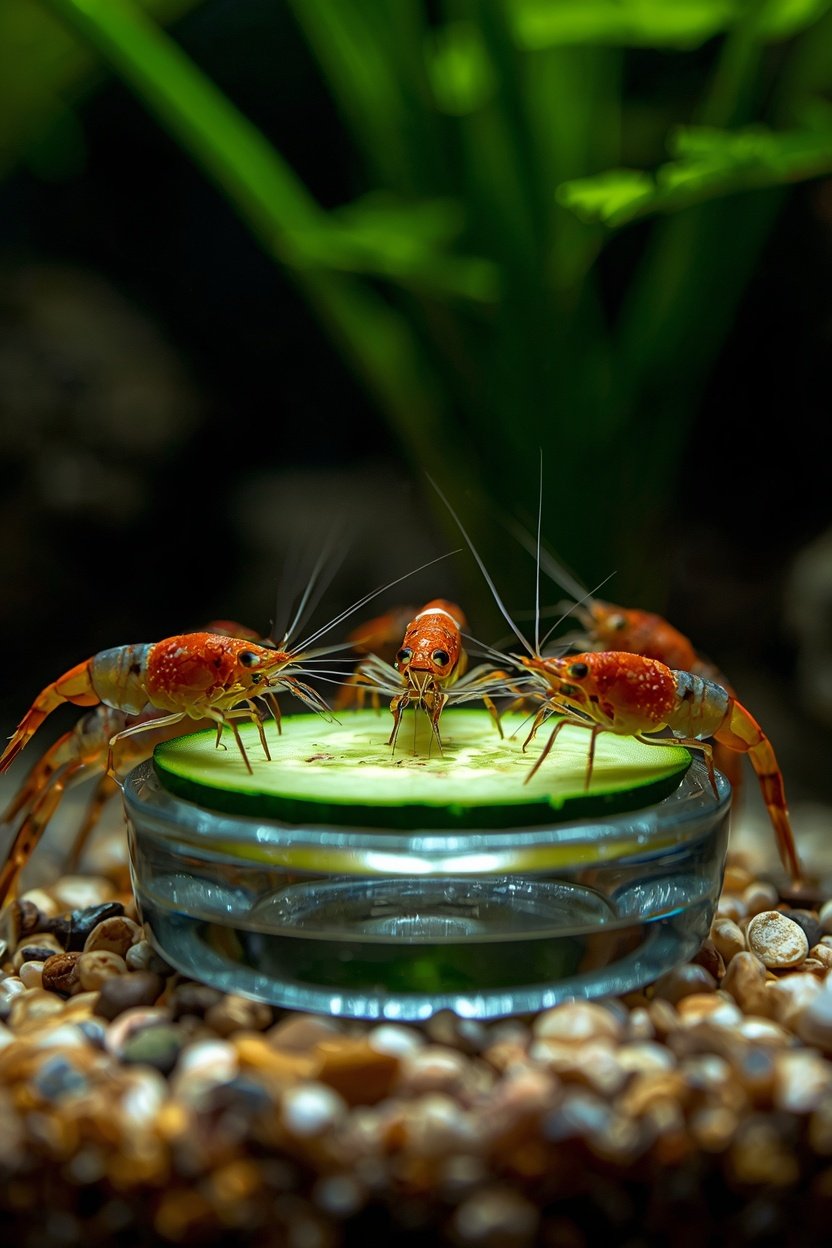
Once biofilm is covered, blanched vegetables are the next building block of a healthy shrimp diet, and they're both affordable and easy for most beginners to prepare at home. Zucchini, spinach, cucumber, and carrot are all popular choices — simply blanch a slice briefly in hot water to soften it, let it cool completely, and drop it into the tank on a small weighted clip or dish.
Shrimp will graze on a piece of blanched vegetable for several hours, so it's important to remove any uneaten portion within that window, generally after two to four hours, before it starts to break down and affect water quality. A small feeding dish makes this easy to track and retrieve compared to a loose piece drifting around the substrate.
Rotating between two or three different vegetables across the week provides a broader range of nutrients than relying on a single type every time, and most keepers find their shrimp show a mild preference for certain vegetables over others through simple trial and error.
3. Commercial Shrimp-Specific Foods
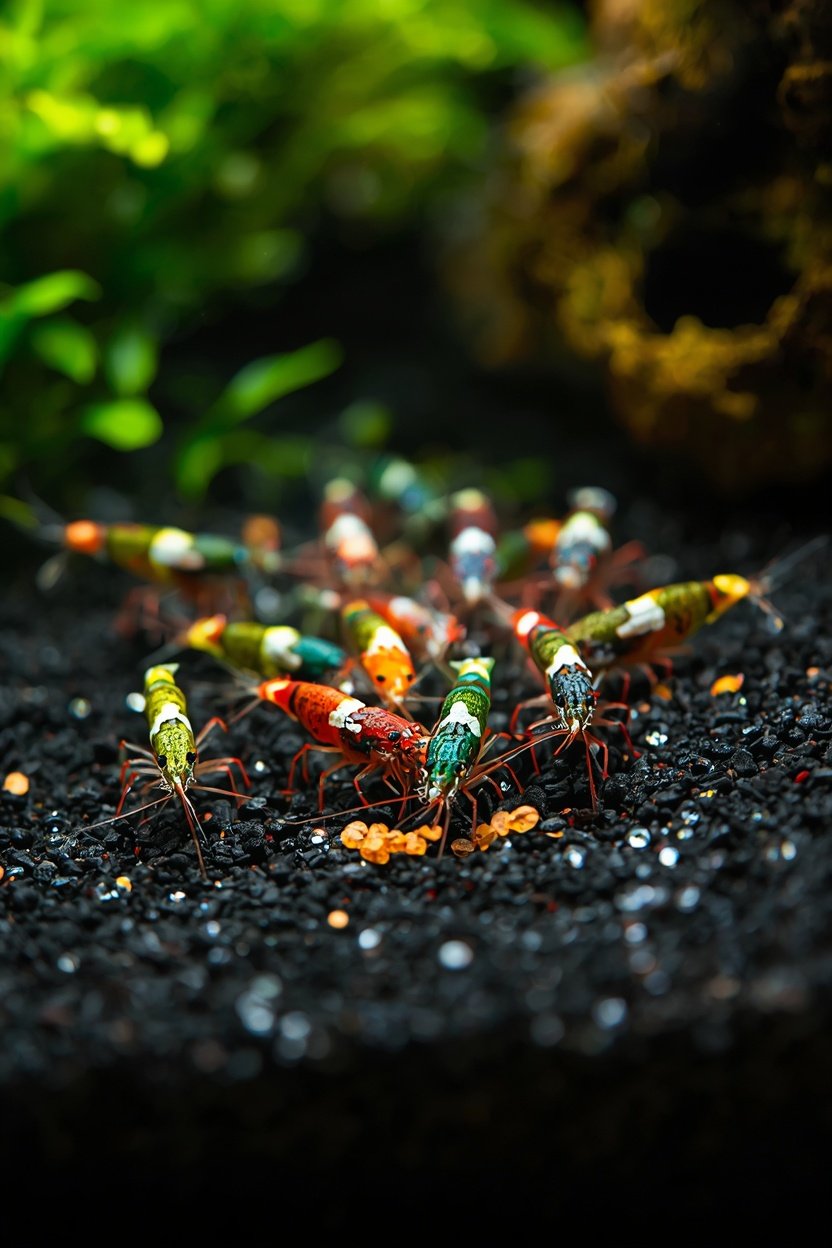
Alongside biofilm and vegetables, a quality commercial shrimp food fills in nutritional gaps that natural grazing and vegetables alone may not fully cover, particularly trace minerals and specific protein levels formulated with shrimp health in mind. These typically come as small sinking pellets or wafers, sized appropriately for a shrimp's much smaller mouth compared to most standard fish food.
Look specifically for food labeled for shrimp rather than a generic bottom-feeder or catfish pellet, since shrimp-specific formulas are usually lower in copper — a mineral that's safe for fish but can be toxic to shrimp even in small amounts. Reading the ingredient label carefully here is genuinely one of the more important label checks in the entire hobby.
A small pinch of shrimp pellets two or three times a week, alongside regular vegetable feedings and ongoing biofilm grazing, is generally plenty for a healthy colony. Overfeeding commercial food is a far more common mistake than underfeeding, since uneaten pellets break down quickly and can affect water quality if left too long.
4. Occasional Protein and Calcium for Healthy Molting
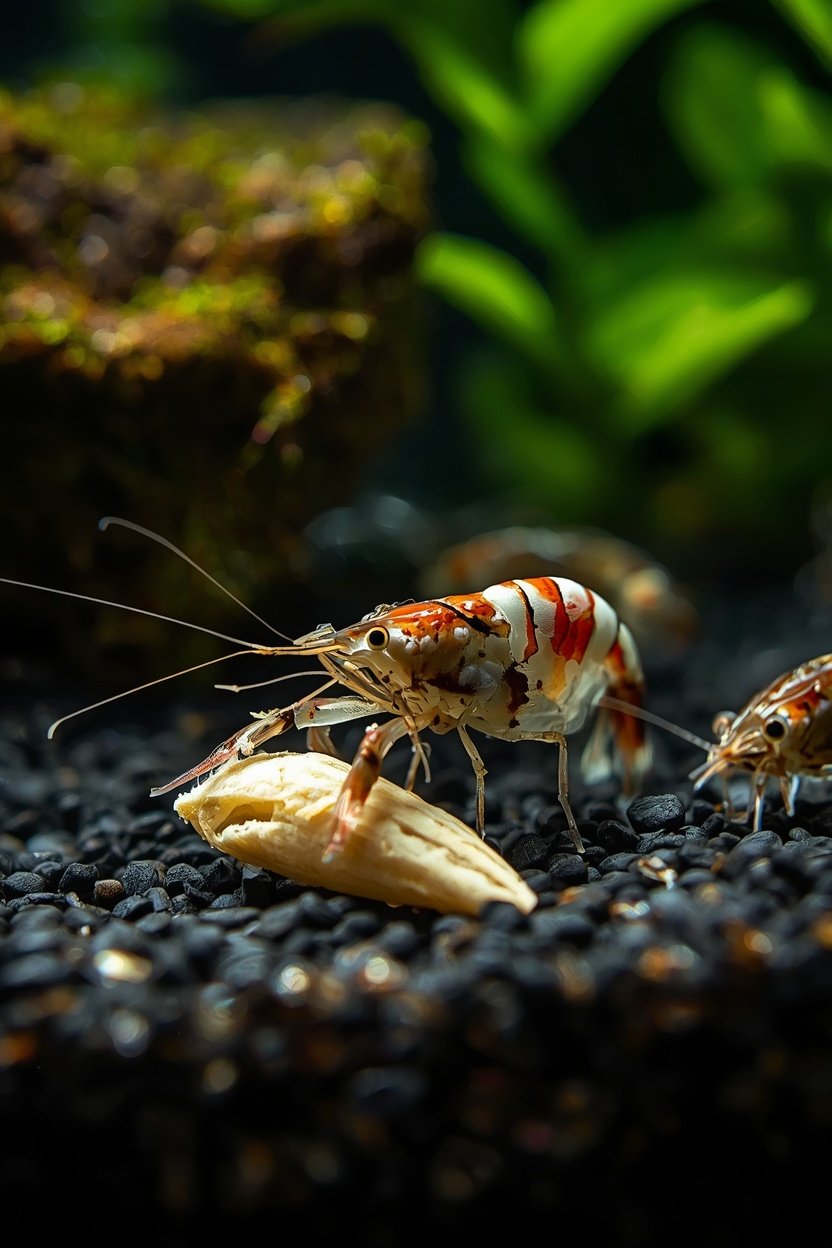
Shrimp molt their exoskeleton regularly as they grow, and this process draws heavily on calcium and mineral reserves, making occasional protein and calcium-rich food an important, if less frequent, part of their diet. A small piece of blanched shrimp, a tiny bit of fish flake, or a specifically formulated calcium supplement offered once a week or so supports healthy shell development and reduces the risk of molting problems.
This is especially worth paying attention to if you're using soft, mineral-poor water or a substrate that doesn't naturally buffer hardness, since shrimp in these conditions may need more direct calcium supplementation to molt successfully. A cuttlebone piece left in the tank, slowly dissolving over time, is a simple, low-effort way to provide ongoing calcium availability between more targeted feedings.
Watch your colony after molting events specifically, since a shrimp that struggles to fully shed its old shell is often a sign that calcium or mineral intake needs attention, making this the one part of a shrimp's diet most directly tied to a visible, observable health outcome.
General Feeding Tips for a Healthy Shrimp Colony
- Feed less than you think is needed. A well-established tank with good biofilm coverage needs far less supplemental feeding than most beginners initially assume.
- Remove uneaten food promptly. Leftover vegetables or pellets left too long can affect water quality, so retrieve anything uneaten within a few hours.
- Avoid copper in any food or supplement. Shrimp are highly sensitive to copper, so always check labels on food, supplements, and even tap water conditioners.
- Observe your colony's specific appetite. Colony size, tank maturity, and available biofilm all affect how much supplemental food is actually needed, so adjust based on what you observe rather than a fixed schedule.
Final Thoughts
A healthy shrimp diet leans far more heavily on natural grazing than most beginners expect, with biofilm doing the bulk of the daily nutritional work and vegetables, commercial food, and occasional calcium supplementation filling in the rest. Understanding this balance, rather than overfeeding out of habit, leads to clearer water, healthier molting, and a colony that thrives rather than merely survives.
Frequently asked questions
How often should I feed my shrimp?
Most established shrimp tanks need supplemental feeding only two to four times a week, since ongoing biofilm grazing covers much of their daily nutritional needs in a mature aquarium.
Can shrimp survive on biofilm alone?
In a well-established, densely planted tank, shrimp can survive largely on biofilm and algae, though occasional vegetable and protein supplementation generally supports better growth, coloration, and breeding success.
What foods should I avoid feeding shrimp?
Avoid any food containing copper, as well as vegetables treated with pesticides or unwashed produce, since shrimp are considerably more sensitive to these contaminants than most freshwater fish.
