
When I got my first small colony of cherry shrimp, I assumed feeding would be the simplest part of the whole hobby — drop in some food, done. It took a little research and a fair bit of trial and error to realize shrimp actually get most of their daily nutrition from sources I wasn't even thinking of as "food" at first, and that overfeeding commercial pellets was doing more harm than good in my small tank.
This guide breaks down exactly what shrimp eat in a healthy home aquarium, from the natural grazing that makes up most of their diet to the supplemental foods worth adding on top of it. Each food type below includes a detailed image prompt so you can visualize what healthy feeding actually looks like in practice.
Why Shrimp Diets Differ From Most Fish
Shrimp are constant grazers rather than fish that eat a few concentrated meals a day, spending most of their waking hours picking at surfaces throughout the tank rather than waiting for scheduled feedings. Understanding this grazing behavior is key to feeding them well, since it means the majority of a healthy shrimp diet actually comes from what's naturally available in a mature tank, with supplemental food playing a smaller, more occasional role than many beginners initially assume.
1. Algae and Biofilm (Their Natural, Everyday Food)
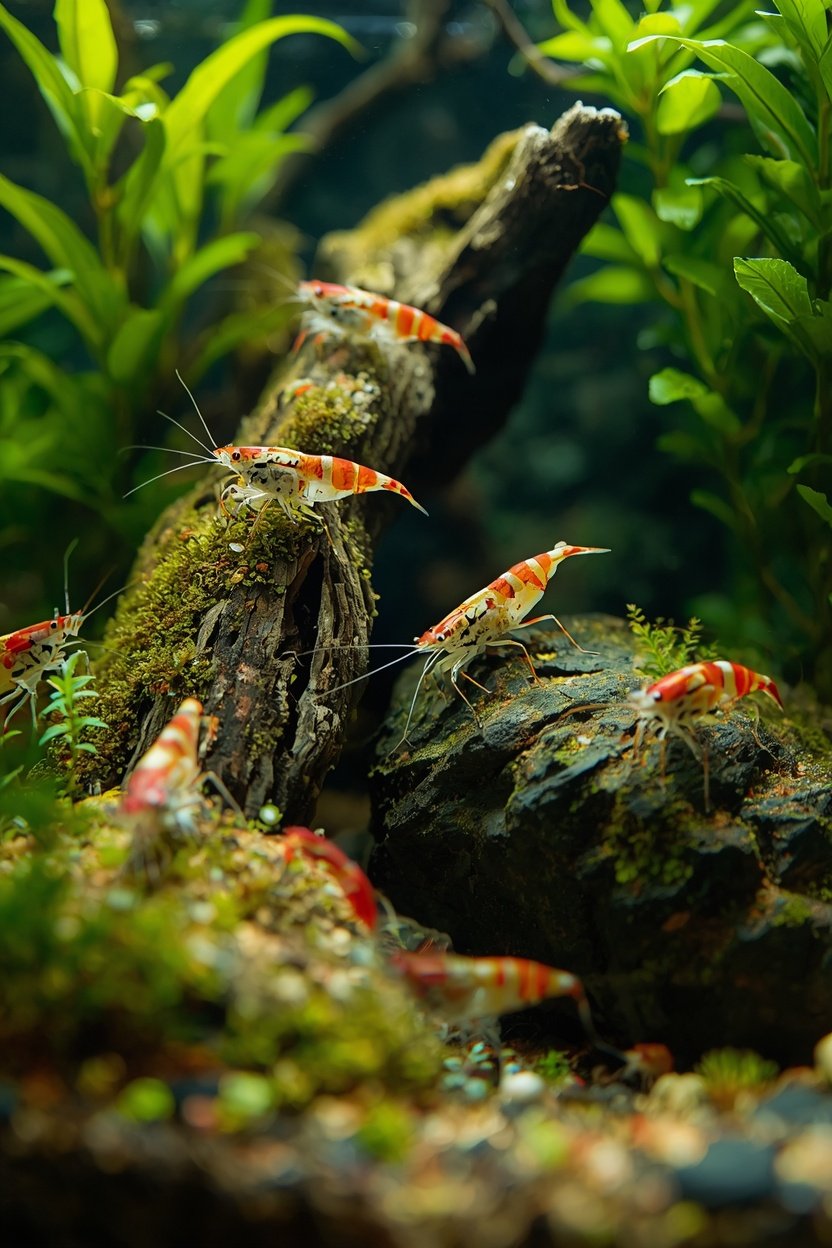
In the wild and in a healthy aquarium, algae and biofilm make up the bulk of a shrimp's actual diet, far more than any commercial food ever will. Biofilm is the thin layer of bacteria, fungi, and microorganisms that naturally forms on rocks, driftwood, and plant leaves, and shrimp spend a large part of each day picking at this surface with their small front legs.
This is exactly why a well-established, slightly "dirty" tank with visible algae growth is actually ideal for shrimp, rather than something to scrub away obsessively. A tank that's too clean and sterile genuinely gives shrimp less to eat throughout the day, which is part of why shrimp often thrive in tanks that have been running and maturing for several months rather than brand-new setups.
You don't need to do anything special to provide this food source beyond letting your tank mature naturally and avoiding excessive cleaning of every surface. Driftwood, rocks, and plant leaves left to develop a natural film are doing real feeding work, even though it's easy to overlook since there's no bag or container involved.
2. Blanched Vegetables
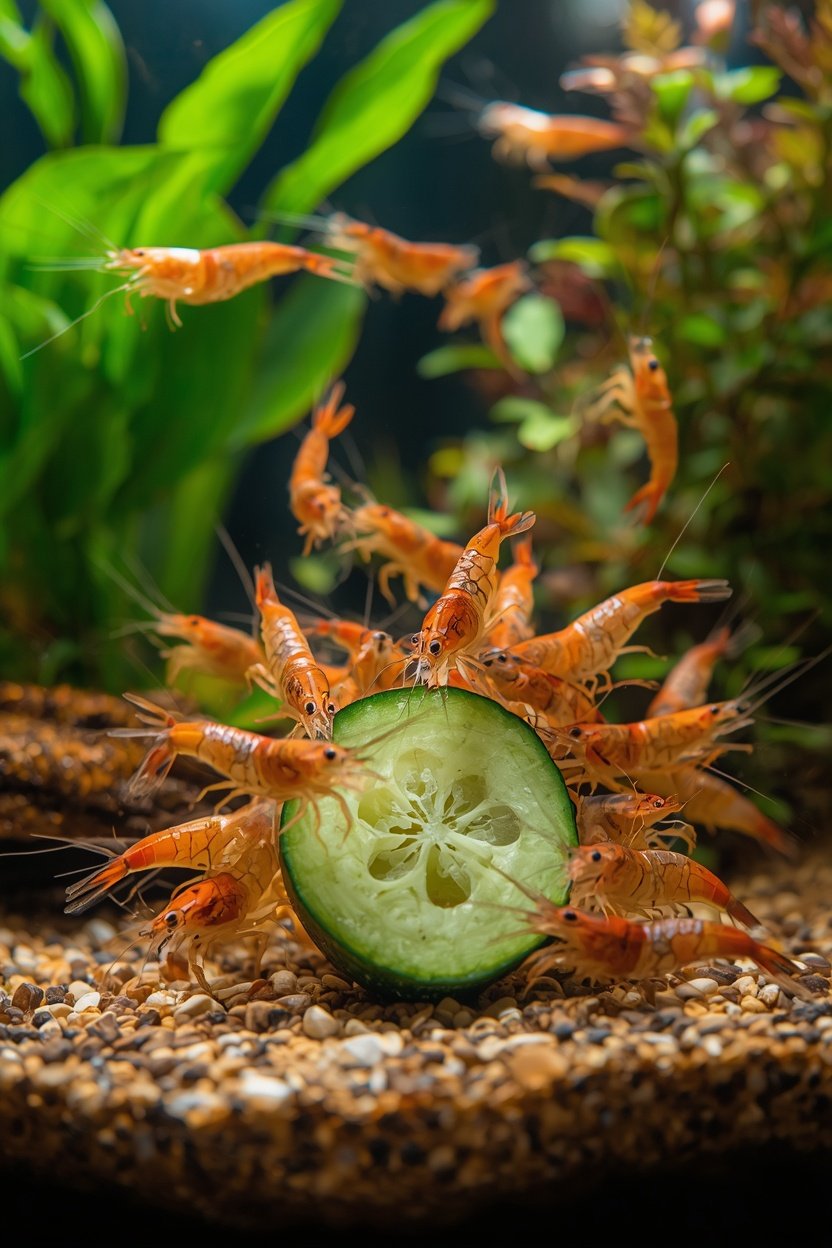
Blanched vegetables are one of the easiest and most affordable supplemental foods for shrimp, giving them a concentrated source of nutrients beyond what biofilm alone provides. Zucchini, cucumber, spinach, and kale are all popular choices, briefly blanched in hot water for a minute or two to soften them before going into the tank, making them easier for shrimp to grip and graze on.
Weigh a slice down with a small fork or clip so it doesn't float away, and remove any uneaten portion within 12 to 24 hours to avoid fouling the water. Shrimp typically swarm a fresh vegetable slice within an hour or two of it going in, picking at the surface continuously until it's mostly stripped down to a thin, translucent remainder.
Rotating between a few different vegetables rather than feeding the same one constantly provides a broader range of nutrients and tends to keep shrimp more interested overall, since they seem to respond with noticeably more enthusiasm to a food source they haven't seen in a few days.
3. Commercial Shrimp Pellets and Sinking Foods
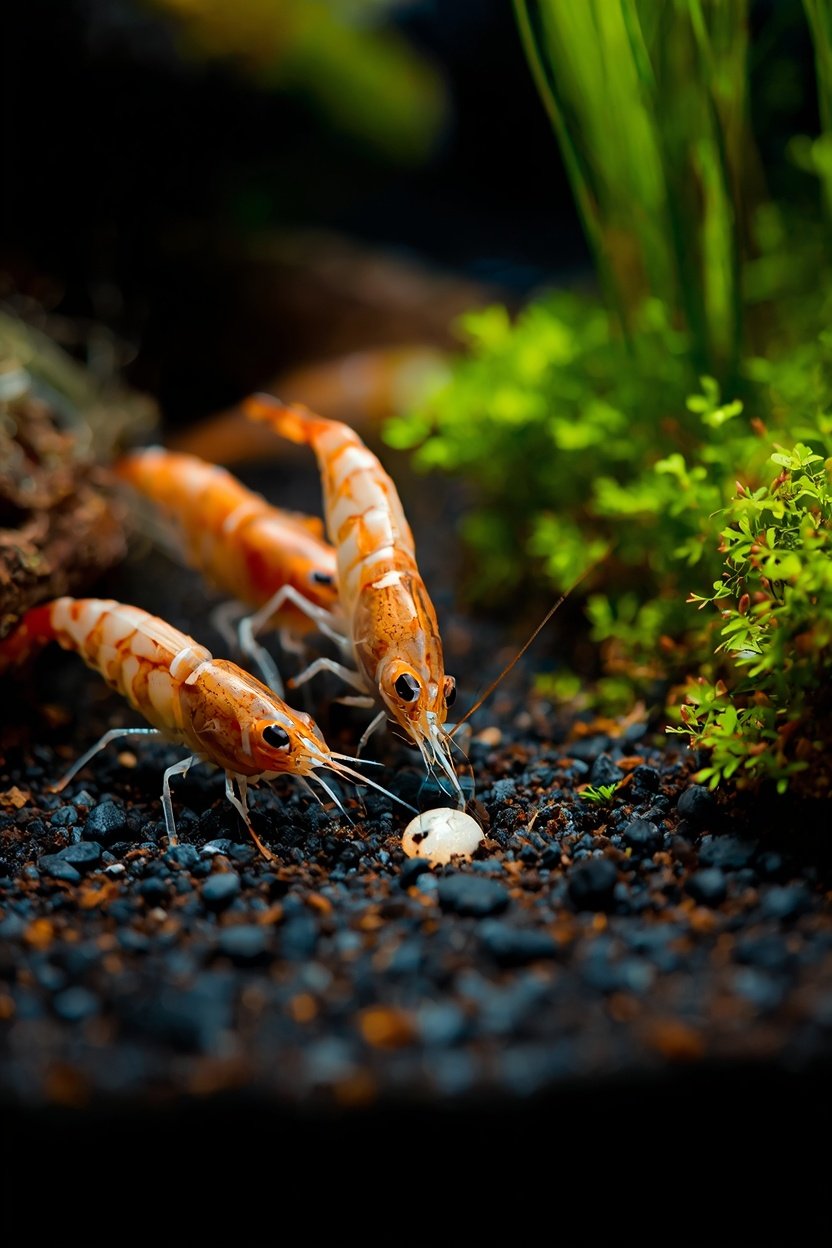
Purpose-made shrimp pellets and sinking wafers are formulated specifically to meet shrimp nutritional needs, often including added calcium to support healthy molting, which is something fresh vegetables and biofilm alone don't fully provide. These commercial foods are especially useful for ensuring a consistent baseline of nutrition, rather than relying entirely on whatever happens to be growing naturally in the tank that week.
Feed sparingly, since shrimp are small and overfeeding commercial food is one of the most common beginner mistakes, quickly leading to water quality problems in a heavily stocked colony. A small pinch every other day, rather than a full pellet daily, is usually more than sufficient for a modest shrimp population.
Look specifically for products labeled for shrimp rather than general bottom-feeder or catfish pellets, since shrimp-specific formulas are balanced for their smaller size and particular nutritional needs, including the calcium support mentioned above that's especially important during their frequent molting cycles.
4. Botanicals and Dried Leaf Litter
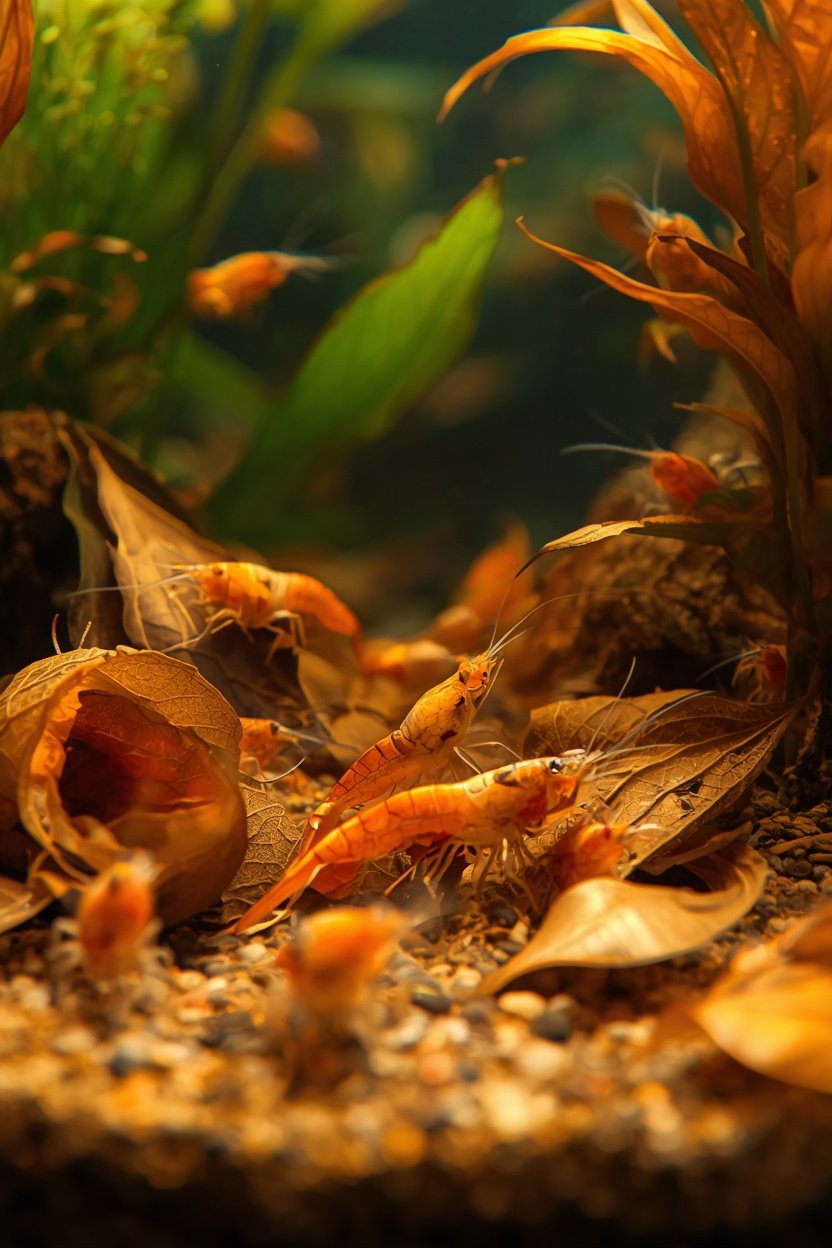
Dried catappa (Indian almond) leaves, alder cones, and similar botanicals serve a genuinely dual purpose in a shrimp tank: they slowly break down and release mild tannins into the water, while also growing their own biofilm layer as they decompose, giving shrimp an additional natural grazing surface distinct from what grows on rocks and driftwood.
Scatter a few leaves across the substrate and allow them to break down naturally over several weeks, replacing them gradually rather than all at once to maintain a steady supply of this grazing surface. Shrimp, especially younger ones, often spend considerable time picking directly at a decomposing leaf's surface, extracting the biofilm much the way they would from any other surface in the tank.
This food source is particularly valuable because it requires almost no active effort beyond occasionally adding fresh leaves, making it one of the lowest-maintenance ways to support a shrimp colony's ongoing nutritional needs alongside the other foods on this list.
Feeding Mistakes to Avoid
- Overfeeding commercial food. Excess uneaten food fouls the water quickly in a small shrimp tank, so err on the side of feeding less rather than more.
- Cleaning the tank too thoroughly. Scrubbing away all biofilm and light algae removes a shrimp's primary natural food source, so some natural buildup is genuinely beneficial.
- Feeding only one type of food. A varied diet across natural grazing, vegetables, and occasional commercial pellets supports better overall health than relying on a single source.
- Leaving uneaten vegetables too long. Remove any remaining vegetable matter within a day to prevent it from decomposing and affecting water quality.
Final Thoughts
A healthy shrimp diet is built mostly on natural grazing — biofilm, algae, and decomposing botanicals — supplemented with occasional blanched vegetables and purpose-made pellets rather than frequent heavy feedings. Once you understand how much of a shrimp's daily nutrition comes from simply living in a mature, naturally established tank, feeding them well becomes considerably less complicated than it might first appear, and considerably less about any single food source doing all the work.
Frequently asked questions
How often should I feed my shrimp?
Most shrimp colonies do well with supplemental feeding just two to three times a week, since natural grazing on biofilm and algae provides a significant portion of their daily nutrition between those feedings.
Can shrimp survive without any added food at all?
A well-established, mature tank with healthy algae and biofilm growth can support a small shrimp colony for extended periods without supplemental feeding, though occasional added food generally supports better long-term health and breeding.
What foods should I avoid feeding shrimp?
Avoid foods high in copper or treated with pesticides, including unwashed store-bought vegetables, since shrimp are highly sensitive to copper and certain chemical residues that are far less harmful to most fish.
