
I made the mistake early on of setting up a tank for a young betta exactly the way I would for a fully grown adult, scaling nothing down and assuming the fish would simply grow into the space over time. Looking back, that little fish seemed genuinely overwhelmed by decor sized for a much bigger version of itself, and it took some adjusting before the tank actually felt right for where it was in its development.
These four ideas focus specifically on what a young, still-developing betta actually needs, rather than treating it like a small adult. Each idea includes a detailed image prompt so you can visualize the finished setup before making changes to your own tank.
Why Young Bettas Benefit From Age-Specific Decor
A juvenile betta's smaller size, developing fins, and still-building swimming stamina mean the same decor and flow recommendations suited to a healthy adult can genuinely overwhelm a younger fish. Planning a tank around where your betta actually is in its growth, rather than where it will eventually end up, supports healthier, less stressed development during these early, more vulnerable months.
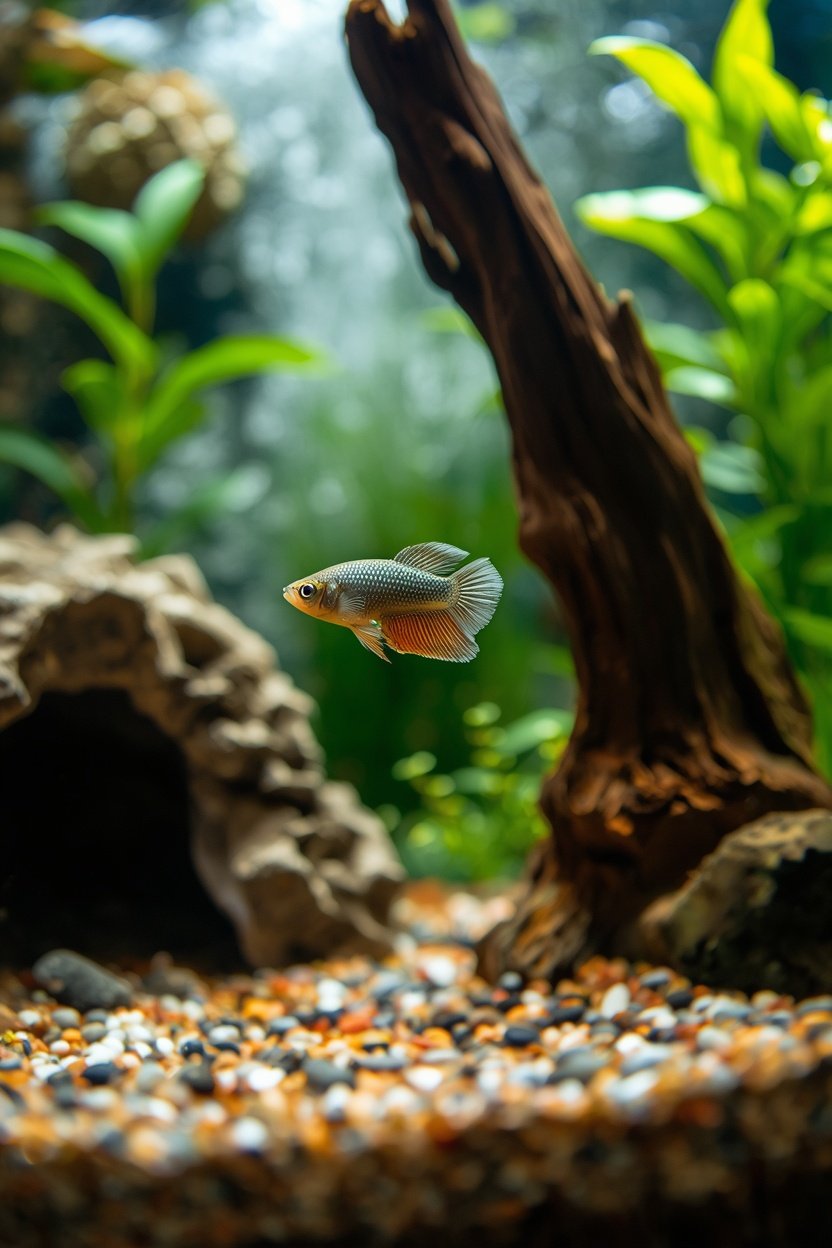
1. Scale Decor Down to Match a Juvenile's Small Size
A young betta is often a fraction of the size it will eventually grow into, and standard adult-sized caves, ornaments, and hardscape can feel oversized and genuinely intimidating rather than secure for a fish still this small. Choosing smaller-scale decor — a mini cave sized for a young fish rather than a full-grown adult, slender driftwood rather than a thick branch — gives a juvenile betta a space that actually fits its current size.
This matters more than it might seem, since a cave or gap that's too large doesn't provide the same sense of enclosed security a properly fitted space does. A young betta exploring a space clearly built for a much bigger fish may continue to feel exposed even while technically surrounded by decor.
As your betta grows over the following months, you can gradually introduce larger pieces to match its increasing size, treating the tank's decor scale as something that evolves alongside the fish rather than something fixed from day one.
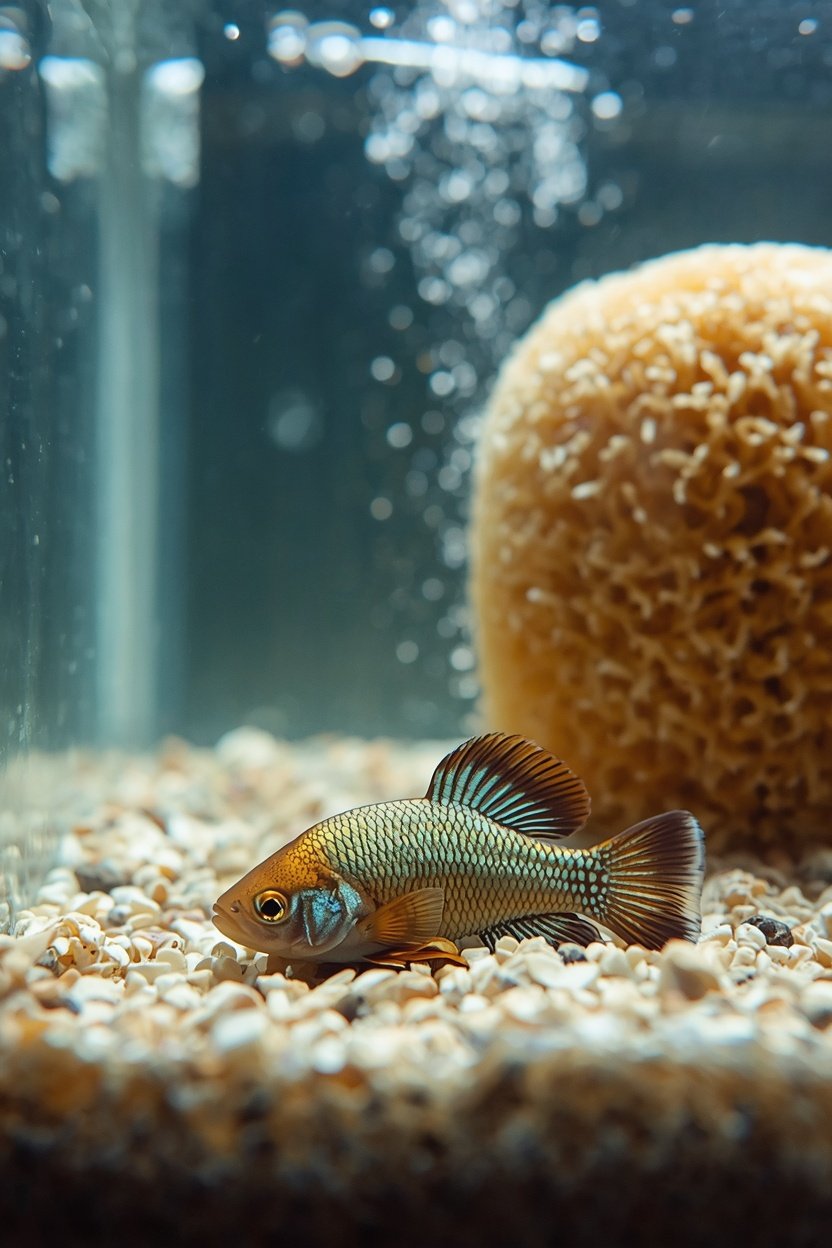
2. Keep Water Flow Extra Gentle for Developing Fins
A young betta's fins and overall swimming strength are still developing, making them considerably more vulnerable to strong water movement than a fully grown adult. Even the gentle flow generally recommended for adult bettas should be reduced further for a juvenile, using a sponge filter or a baffled filter outlet to minimize current throughout the tank.
Position any remaining water movement away from where your young betta tends to rest, giving it calm, low-flow areas to retreat to if the main flow feels like too much. This is especially important in the weeks after introducing a juvenile betta to a new tank, when it's still adjusting to its full environment.
As the fish matures and its fins and swimming strength develop further, flow can often be adjusted closer to standard adult betta recommendations, but starting gentle and adjusting upward is a safer approach than assuming a young fish can handle adult-level conditions from the start.
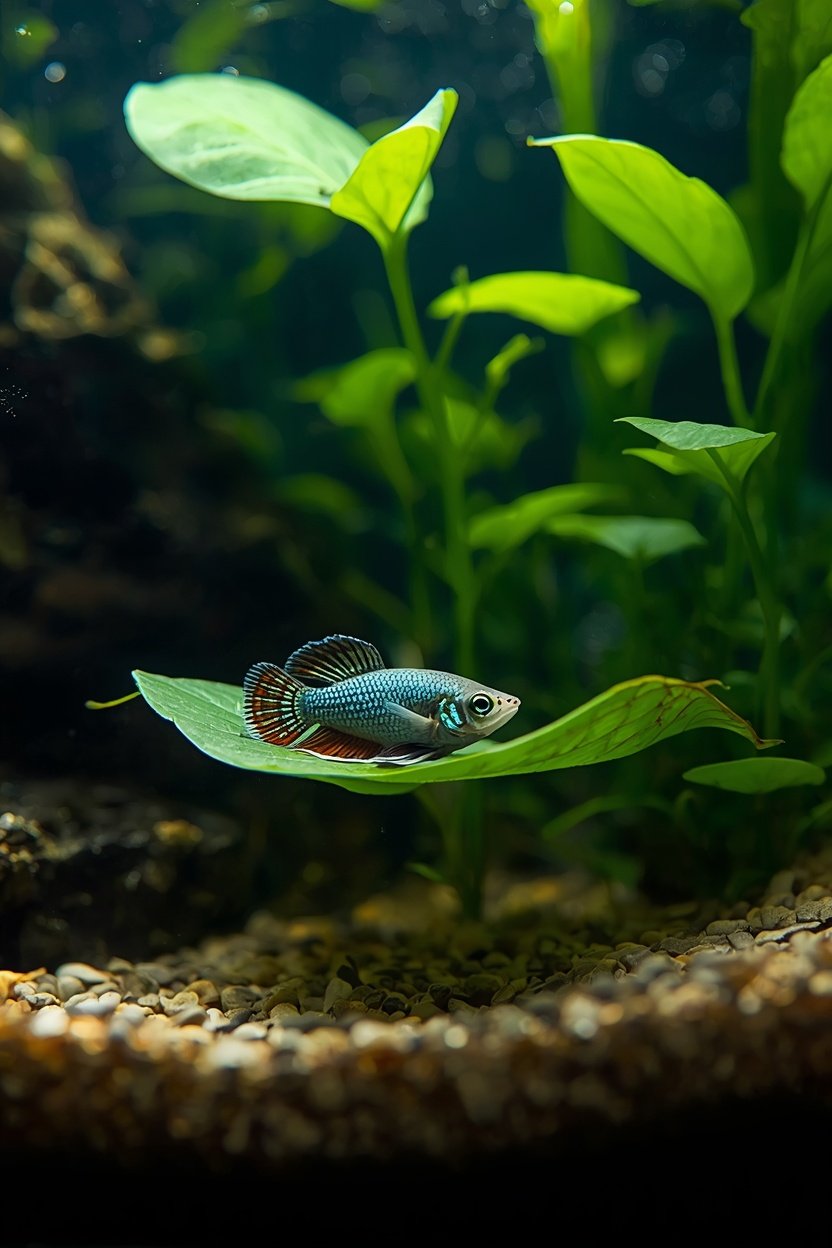
3. Provide Shallow Resting Spots Near the Surface
Bettas are labyrinth fish that need regular access to the water's surface to breathe atmospheric air, and a young betta still building swimming stamina benefits from resting spots positioned closer to the surface than might be necessary for a stronger adult fish. A shallow leaf hammock or a broad, low-positioned plant leaf gives a juvenile an easy, low-effort place to rest without expending much energy reaching it.
Position these resting spots in a calm area of the tank, away from any current, so a young betta can access the surface comfortably without fighting water movement at the same time it's trying to rest. This combination of easy surface access and calm water is particularly valuable during a juvenile's early weeks in a new tank.
This idea works well alongside scaled-down decor and gentle flow from the earlier ideas, together creating an environment genuinely suited to where a young betta is in its development rather than one built around full adult capability.
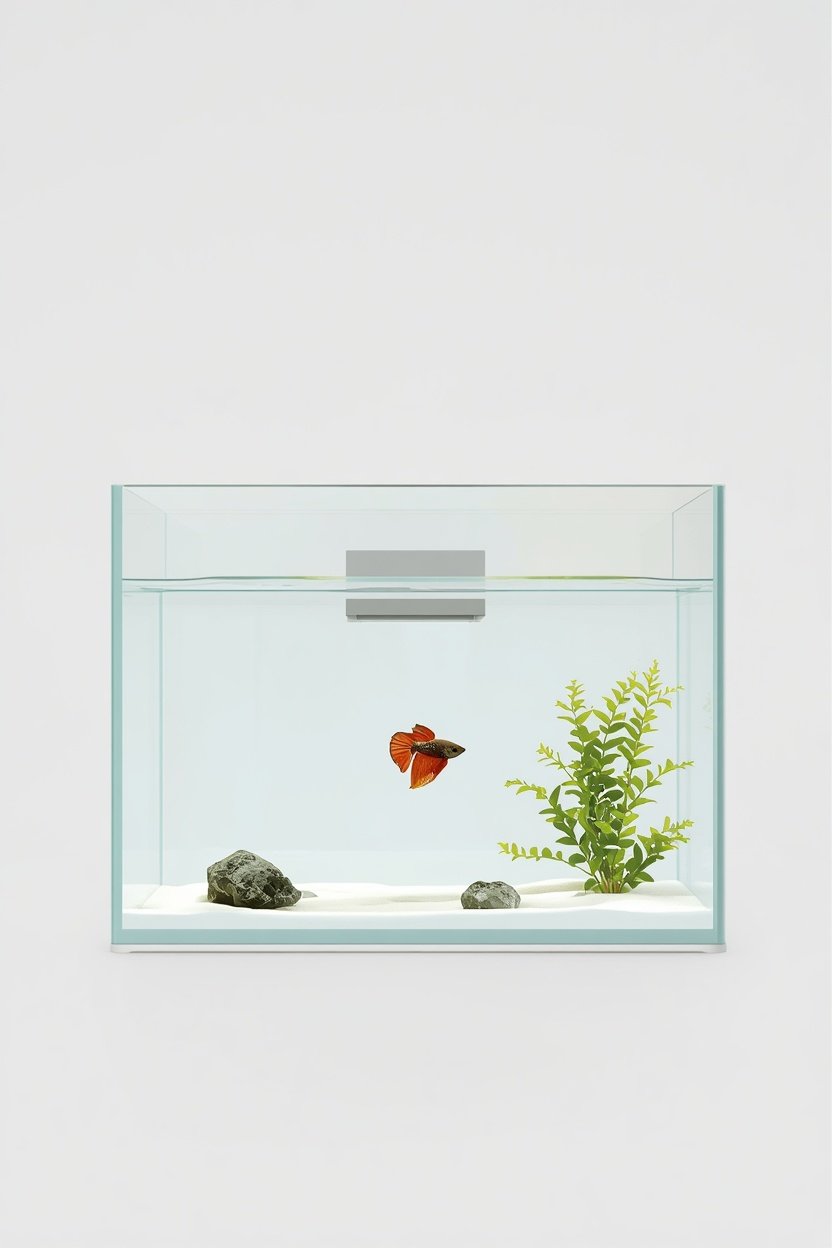
4. Keep the Layout Simple to Reduce Navigational Stress
A busy, elaborately decorated tank can be genuinely overwhelming for a young betta still learning to navigate its environment, whereas a simpler layout with fewer obstacles and clearer open pathways reduces the cognitive and physical demands of simply moving around the tank. One or two well-placed decor pieces, rather than a dense, maze-like arrangement, suits a juvenile's current needs far better than an elaborate adult-style aquascape.
This doesn't mean the tank has to look sparse or unfinished — a thoughtfully simple layout can still look genuinely beautiful while prioritizing ease of movement for a fish still growing into its full size and swimming ability. Clear, open water between the few decor pieces present gives a young betta room to explore confidently rather than squeezing through tight gaps.
As your betta matures and grows more confident navigating its space, you can gradually add complexity to the layout, following the same principle of letting the tank's decor evolve alongside the fish rather than starting at full complexity before the fish is ready for it.
Additional Tips for Raising a Young Betta
- Monitor growth and adjust decor gradually. As your betta matures, periodically reassess whether its current decor scale and flow settings still suit its size and strength.
- Keep water changes consistent and gentle. Young fish benefit from stable, predictable water conditions even more than adults, so avoid large, sudden parameter swings.
- Feed appropriately sized food. Make sure food particles are small enough for a young betta's mouth, adjusting as it grows into larger food sizes over time.
- Avoid introducing tankmates too early. A young betta is still adjusting to its own environment, so wait until it's larger and more established before considering any tankmates.
Final Thoughts
A young betta thrives in a tank built around its actual current size and development, not a scaled-up version of adult betta care applied too early. Appropriately sized decor, gentle water flow, accessible resting spots, and a simple, navigable layout together create an environment where a juvenile betta can grow comfortably and confidently, with the tank evolving alongside it as it matures into adulthood.
Frequently asked questions
At what age can a young betta handle adult-level tank conditions?
This varies by individual fish, but most bettas reach closer to full size and swimming strength by around six months to a year old, making gradual adjustments over this period more reliable than a single fixed timeline.
Do young bettas need a smaller tank than adults?
While a young betta can technically live in an appropriately sized adult tank from the start, many keepers find a smaller, more manageable space easier to keep clean and navigate during the early months before transitioning to a larger setup.
How can I tell if my young betta is stressed by its current tank setup?
Signs like clamped fins, hiding excessively, or reduced activity can indicate stress, and reassessing decor scale, water flow, and layout complexity is a reasonable first step if you notice these signs in a young fish.
